
Winter Gardens
A traditional winter garden is an extension attached to the house, with both walls and roof made of glass. A glazed room significantly extends the usable season of the terrace — from spring to late autumn you can comfortably spend time there, and even during cooler periods it serves as a pleasant buffer room between the house and the garden.
In addition to being very practical, glazing a terrace also gives you an interesting and versatile extra room for the spring-summer period, along with a wealth of possibilities.
What is a winter garden (glass veranda) and does it suit Estonia?
A winter garden — also called a glass veranda — is a warm, comfortable glazed room, usually attached to the house or on a terrace, with glass walls and a glass roof. For Estonia’s seasons, an uninsulated (cold) winter garden is a practical choice: simpler structure, good ventilation, use from spring to autumn, and in winter a wind- and snow-free outdoor room (optionally with an IR heater or stove).
How much does a winter garden cost?
An indicative range for an uninsulated winter garden is about €8,000–€40,000+, depending on how many sides are glazed, height, system and extra works. Every project is custom — the final price comes after a free measurement and quote. Read more about pricing or request a quote.
Can you use a winter garden in winter? What about a glass roof?
Yes — a cold winter garden is not a heated living room, but a wind- and snow-free space for e.g. cooling after the sauna or a short sit with extra heat. A glass roof lets in winter sun; tinted roof glass helps against summer heat. Experience: winter garden in winter.
Glass-roof winter garden
The watertightness of the roof is ensured by a profile system specifically developed for glass roofs. The glass has three-sided support, the leading edge is left open and may extend up to 200 mm beyond the front edge of the roof. The final weatherproofing of the winter garden is achieved with butyl tape bonded at the glass joints; side profiles and wall connections are finished with cover flashings.
Versatile uses of a winter garden
When planning a winter garden, you should think carefully about how you wish to use it:
- for entertaining guests (e.g. garden parties),
- for family time together / dining,
- as a cosy play area for children in any weather,
- as a comfortable reading room,
- for growing plants, etc.
This determines what temperature should prevail in the winter garden — in other words, on which side of the house it should be located and how high the walls should be. Although a winter garden may seem like a luxurious and costly idea at first, it also functions at all times as a protective buffer zone — the wall of the house where the winter garden is located is sheltered from wind and rain, which reduces heat loss.
Winter garden construction
For winter gardens we offer seasonal (non-insulated) solutions with single-pane glass, where the walls consist of openable terrace glazing panels.
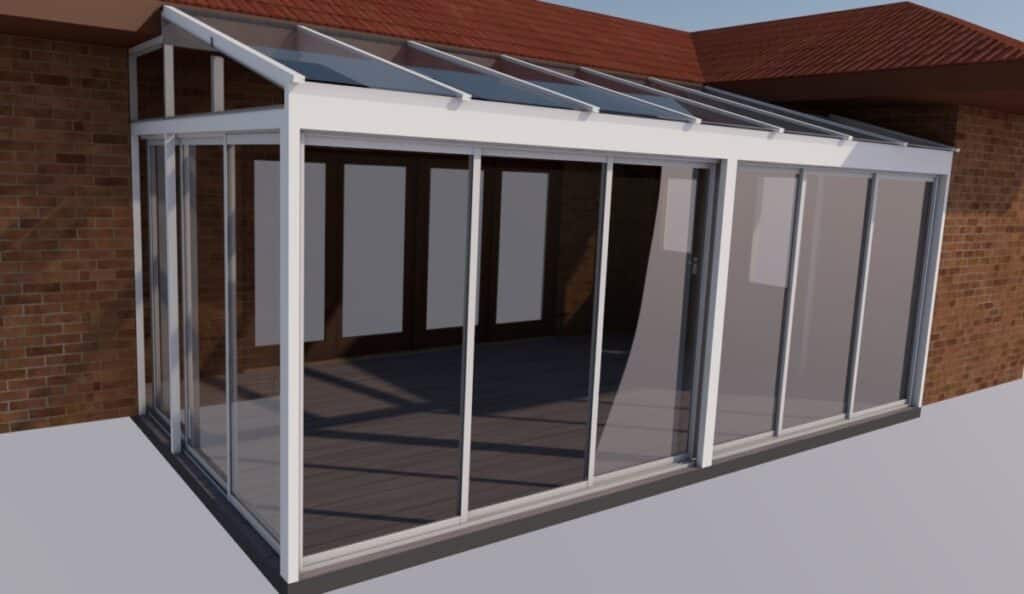
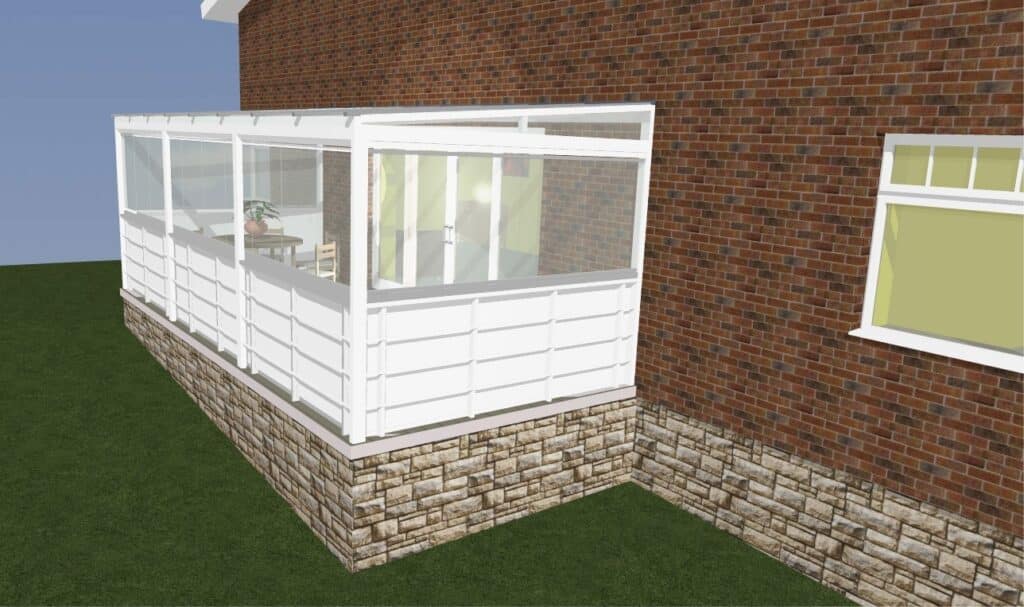
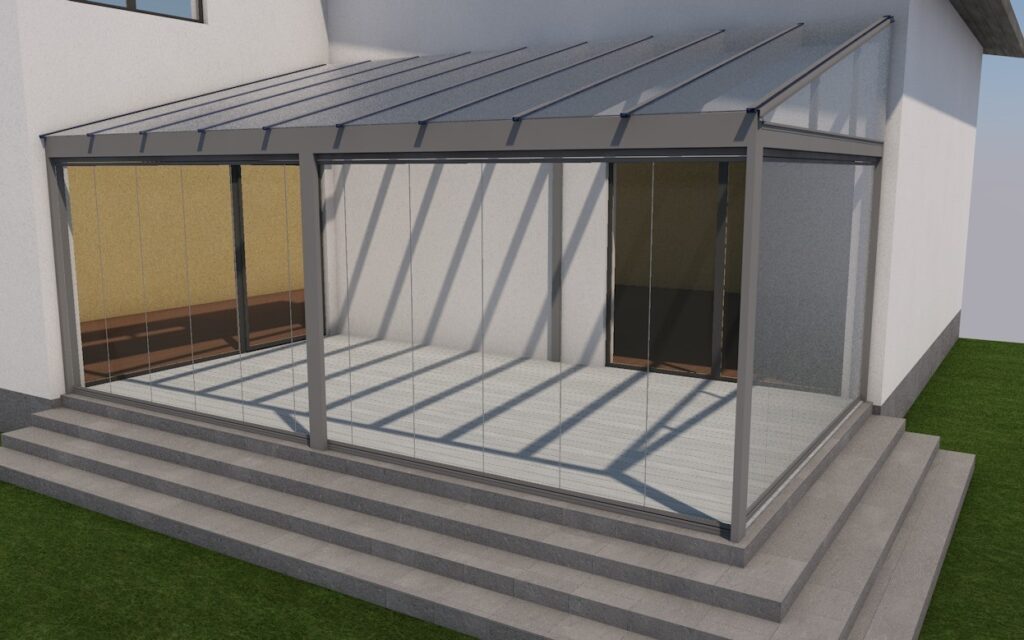
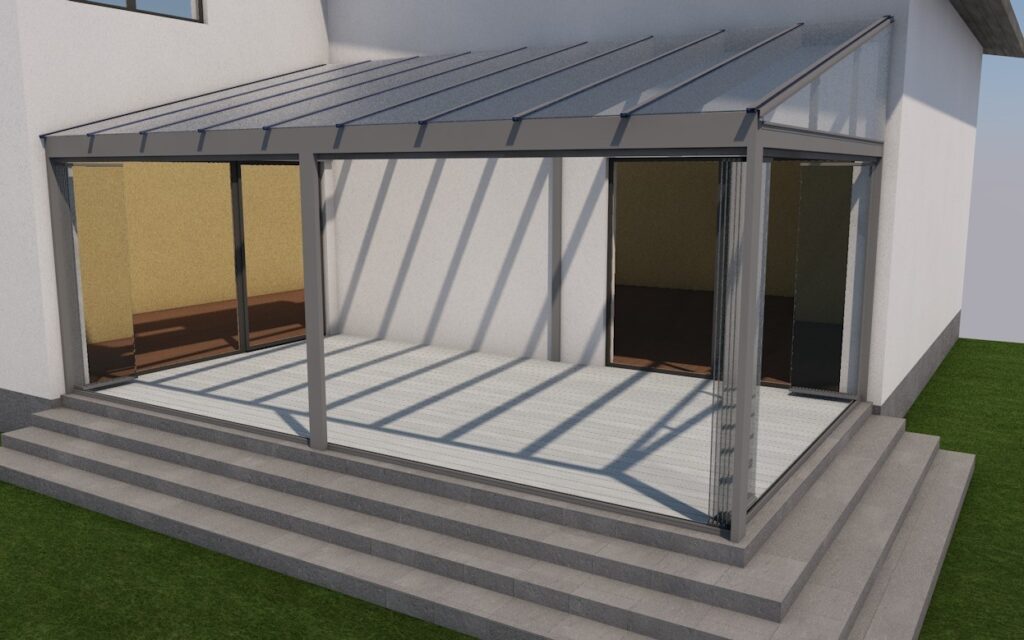
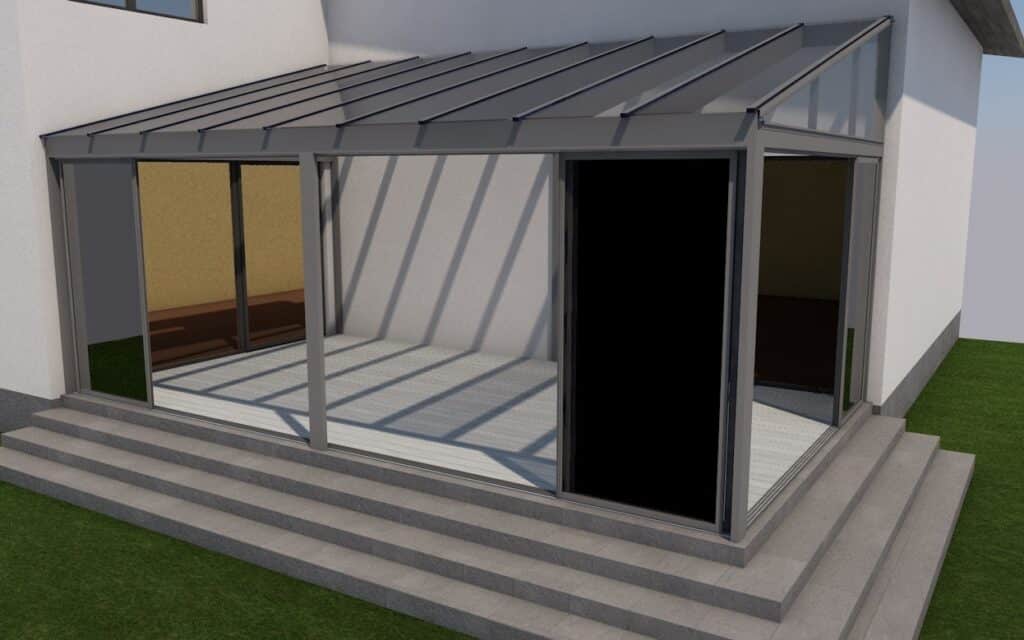
The maximum roof rafter length should remain between 3 and 4 metres. The winter garden frame structure is made primarily from 50×50, 100×50, 150×50 and 200×50 mm aluminium square tubes. The surface finish is powder coating in a very wide colour range based on the RAL catalogue.
The winter garden construction details are pre-fabricated profile by profile in the factory and assembled on site. Tempered glass with a thickness of 6, 8 or 10 mm is used to cover the winter garden roof (laminated glass where required).
Why our winter garden suits the Estonian home
A winter garden is a warm and cosy glass room that significantly extends the use of outdoor space. Klaaskoda specialises in seasonal (non-insulated) glass winter gardens — for most Estonian homes this is the best choice. A year-round heated winter garden costs 2.5–3 times more and is justified only in special cases. Below we explain which type of home and lifestyle our solution suits best.
Our winter garden — a warm and cosy glass room
Our winter garden is a lightweight structure with single-pane tempered glass and an aluminium frame — technically non-insulated, yet in practice surprisingly warm and comfortable. Even in early spring sunshine the glass heats the room quickly; from April through October you can spend quality time there without a jacket. Even during cooler periods the winter garden is an excellent buffer room between the house and the garden — wind, rain and dust stay outside the door.
The advantages of our winter garden are a simpler structure, faster construction time and a smaller load on the existing house. Because no insulation is added, the scope of construction is also smaller, making it a sensible investment. If you wish to use the room in late autumn or in winter sunshine, you can always add an electric radiator — but on most days this is not necessary.
Insulated winter garden — a different solution
The market also offers insulated (heated) winter gardens — these are full-value extensions with double-glazed units, insulated profiles and a proper foundation that can be used year-round. An insulated winter garden requires a significantly larger investment, more complex construction and a heating solution.
ATKA Klaaskoda focuses on seasonal glass winter gardens — we do not offer year-round heated extensions. The advantages of our solution: simpler and lighter construction, natural ventilation (openable walls), faster build, smaller load on the existing house and a considerably more reasonable investment. In Estonia’s seasonal climate our winter garden extends the use of outdoor space to 6–8 months of the year, while maintaining a comfortable temperature.
Shade in summer, not heat — tinted roof glass
A glass-roofed room can overheat in summer sunshine — the greenhouse effect is a real problem that hastily designed projects often overlook. The solution is tinted roof glass, which filters the sun’s heat: light stays, heat goes. The result — the winter garden does not turn into a sauna in summer but remains cool and comfortable even on the hottest day. We always choose the roof glass according to how much sun the building receives and from which direction.
Comparison — seasonal vs year-round winter garden
- Usage period: seasonal winter garden from April to October (warm in sunshine, comfortable even on a cool spring day); year-round winter garden 12 months with heating
- Glass: seasonal winter garden has single-pane tempered glass (optionally tinted roof glass against summer heat); year-round winter garden has double-glazed unit with energy-saving coating
- Structure: seasonal winter garden has a lighter aluminium frame; year-round winter garden has insulated profiles and a stronger foundation
- Heating: seasonal winter garden does not require it (optional supplementary radiator); year-round winter garden requires a mandatory heating solution
- Building permit: a smaller seasonal winter garden may not require one; an extension over 20 m² typically requires a building permit
ATKA Klaaskoda specialises in designing and building seasonal glass winter gardens. Our solution is perfectly suited to the Estonian season — from spring to autumn it provides full-value extra space, and in winter it acts as a protective buffer zone, reducing heat loss from the house. We will advise you on which solution suits your home best, taking into account the house construction, its orientation relative to the compass points and the intended use.
Winter garden construction process step by step
Building a winter garden is a multi-stage project where every step matters for the quality of the final result. Because ATKA Klaaskoda carries out the entire process itself — from foundation to glass — project management is simpler and the result more consistent.
1. Consultation and site measurement
Everything starts with a conversation in which we establish your wishes and needs. What will the winter garden be used for? How large should the winter garden be? How large should the winter garden be? Our specialist then comes to the site, measures the existing structure and assesses the condition of the house. In Pärnumaa, Saaremaa and Hiiumaa we carry out the on-site measurement free of charge.
2. Design and solution approval
Our engineers design the winter garden solution, taking into account both your wishes and the structural requirements. We calculate the structural strength, glass thicknesses and, where necessary, snow and wind loads. This is especially important for projects in Pärnu and coastal areas, where the wind load is noticeably greater than inland. We agree the solution with you and, where necessary, submit the building permit application.
3. Foundation construction
The winter garden foundation is the basis of the entire project. Without a proper foundation the structure will move, the glass panels will jam and the warranty will not apply. In Pärnumaa the soil frost depth is approximately 1.2–1.4 metres and the foundation must reach below that. We construct strip foundations, slab foundations and point foundations — depending on the type of winter garden and the soil conditions.
4. Aluminium frame construction
The winter garden frame is made from aluminium square tubes and the structural details are pre-fabricated profile by profile in the factory. On site the frame is assembled and fixed to the foundation. Aluminium is the ideal material for a winter garden frame — it is light, strong, corrosion-resistant and requires no painting. Particularly in coastal areas, where salty sea air accelerates the corrosion of metals, the durability of aluminium is an important advantage.
5. Installation of glass panels and roof
Malmerk Klaasium glass solutions are installed on the walls — depending on the project, these are either openable terrace glazing panels, sliding glass panels or fixed panels. The glass roof is covered with tempered glass 6, 8 or 10 mm thick, and where required laminated glass is used to provide additional safety. The watertightness of the roof is ensured by a special profile system and butyl tape.
6. Finishing and handover
Finally, all joints are finished, cover flashings are installed and the functioning of the glass panels is checked. We hand over the winter garden together with a user manual and warranty. The entire process — from consultation to handover — typically takes 8–12 weeks, depending on the complexity of the project.
Winter garden maintenance and longevity
A properly built winter garden is a long-term investment that lasts for decades. The aluminium frame does not rust, does not warp and requires no regular painting — the powder-coated surface retains its appearance for decades. The glass panels are durable and standard glass cleaner is sufficient to clean them.
Winter garden maintenance is simple and requires no specialist skills. The main maintenance tasks are as follows:
- Cleaning glass panels — wash the glass at least twice a year with glass cleaner. In coastal areas, where salty air leaves marks on the glass, it is advisable to clean more frequently.
- Sliding mechanism and moving parts — check and clean the terrace glazing tracks once a year. Remove dust, leaves and dirt that may accumulate in the lower track.
- Seals and gutters — inspect the condition of the seals annually. The butyl seals on the glass roof and the seals on the side profiles ensure watertightness and must be intact.
- Removing snow from the roof — although the glass roof is designed to carry Estonia’s snow load, it is advisable to remove an especially thick layer of snow from the roof. Use a soft tool that will not scratch the glass.
- Aluminium surface maintenance — wash powder-coated aluminium surfaces once a year with lukewarm soapy water. Do not use abrasive products.
With regular maintenance, the expected service life of a winter garden installed with Malmerk Klaasium systems is 30+ years.
Malmerk Klaasium systems in winter gardens
ATKA Klaaskoda uses Malmerk Klaasium glass solutions in building winter gardens — products from Estonia’s largest manufacturer of glass-aluminium systems. Malmerk Klaasium systems are designed and manufactured in Estonia, CE-certified and VTT-tested. This means that every component — profiles, seals, glass and fixings — has been developed for the Estonian climate.
Advantages of Malmerk Klaasium systems in a winter garden:
- Designed for the Estonian climate — profiles and seals withstand our harsh winters, large temperature fluctuations and humidity
- Precise fit of aluminium-glass profiles — profiles manufactured on CNC machines in the factory ensure millimetre precision and long-term performance
- Wide range of openable solutions — framed sliding glass, frameless sliding glass and frameless folding glass allow the winter garden walls to be fully opened
- Availability of spare parts and service — as it is an Estonian manufacturer, spare parts and maintenance are always available. With imported solutions, waiting for a spare part can take weeks.
Winter garden in Pärnu and the maritime climate
Pärnu and the entire coastal area of western Estonia impose special requirements on winter garden construction. A location close to the sea means stronger wind loads, salty sea air and higher humidity. ATKA Klaaskoda is based in Pärnumaa and has thorough knowledge of local conditions.
When building winter gardens in the Pärnu area we take into account the following factors:
- Wind resistance — in coastal areas the wind load is significantly greater than inland. We design the winter garden structure accordingly and use reinforced fixings.
- Resistance to salt air — the aluminium frame and powder-coat finish are inherently corrosion-resistant and suit a near-coastal environment better than steel or timber.
- Soil characteristics — Pärnumaa’s sandy and in places boggy soil requires special attention when designing the foundation. We account for local soil conditions.
- Local service — as our team is based in Pärnumaa, on-site measurement, construction and subsequent maintenance are fast and convenient. We also visit Saaremaa and Hiiumaa regularly.
A winter garden is a particularly suitable solution for detached houses in the Pärnu area — sea winds and rainy weather shorten the usual terrace season, but a glazed winter garden allows you to enjoy the garden and the view even when the weather does not permit being fully outside.
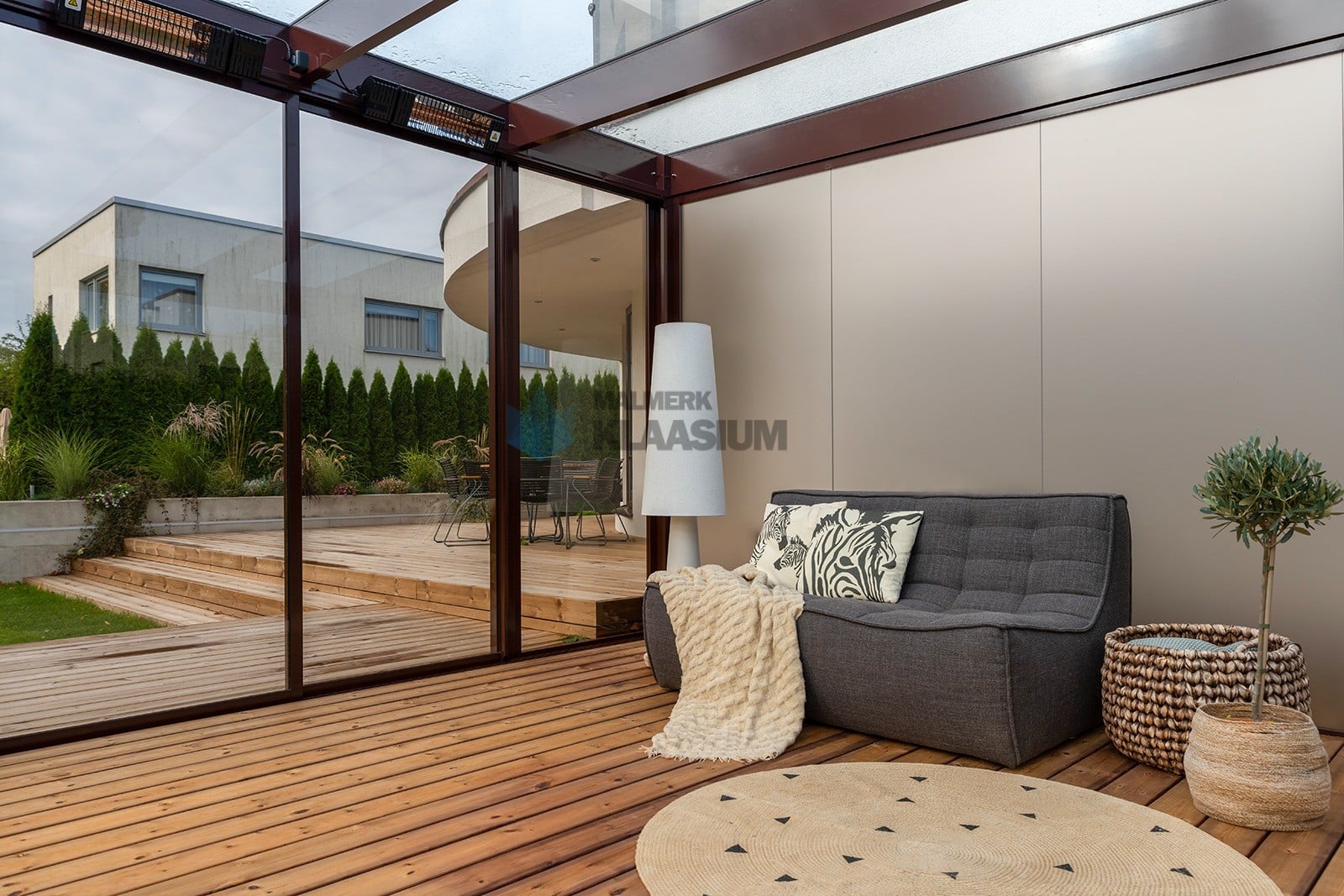
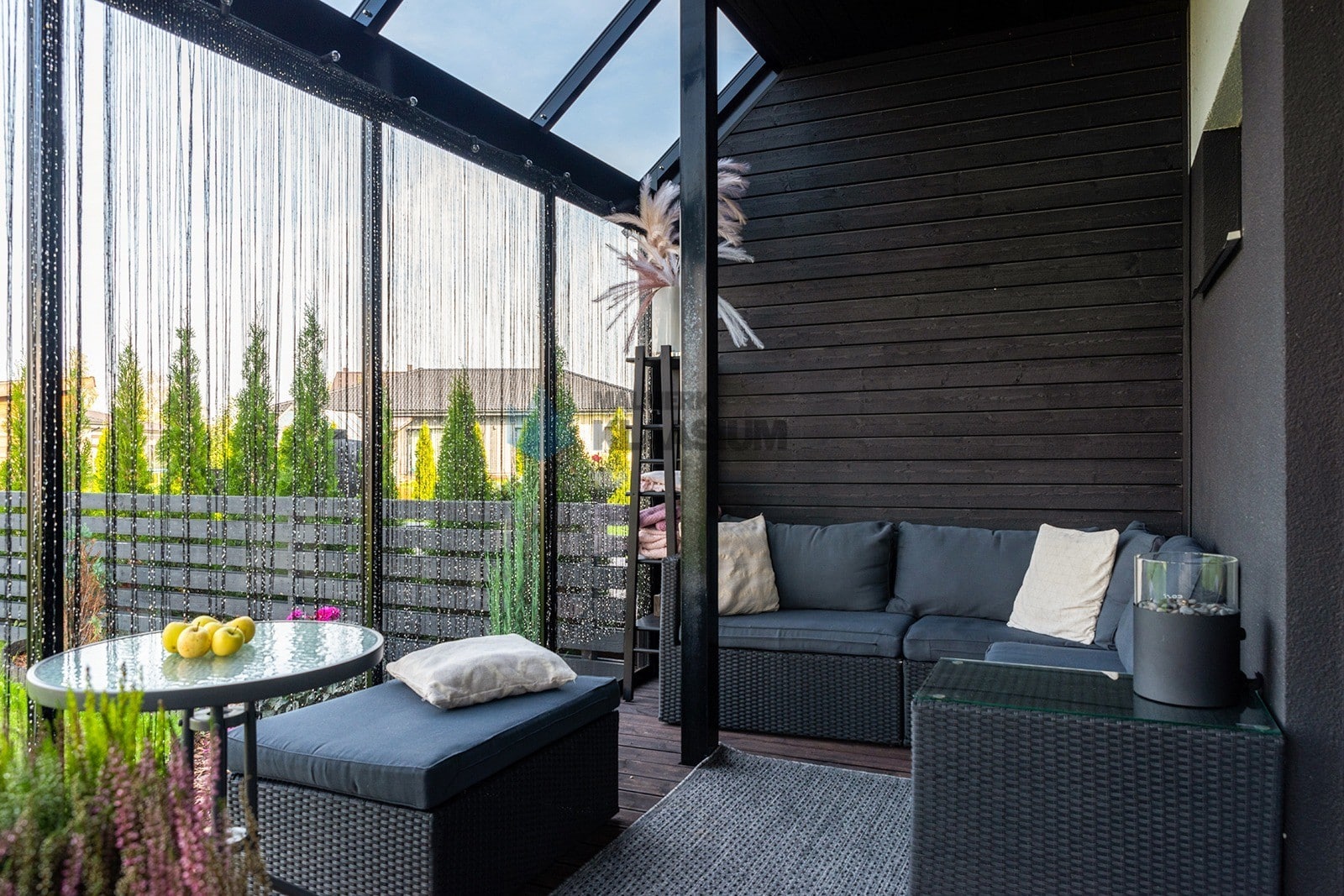
Completed Winter Gardens
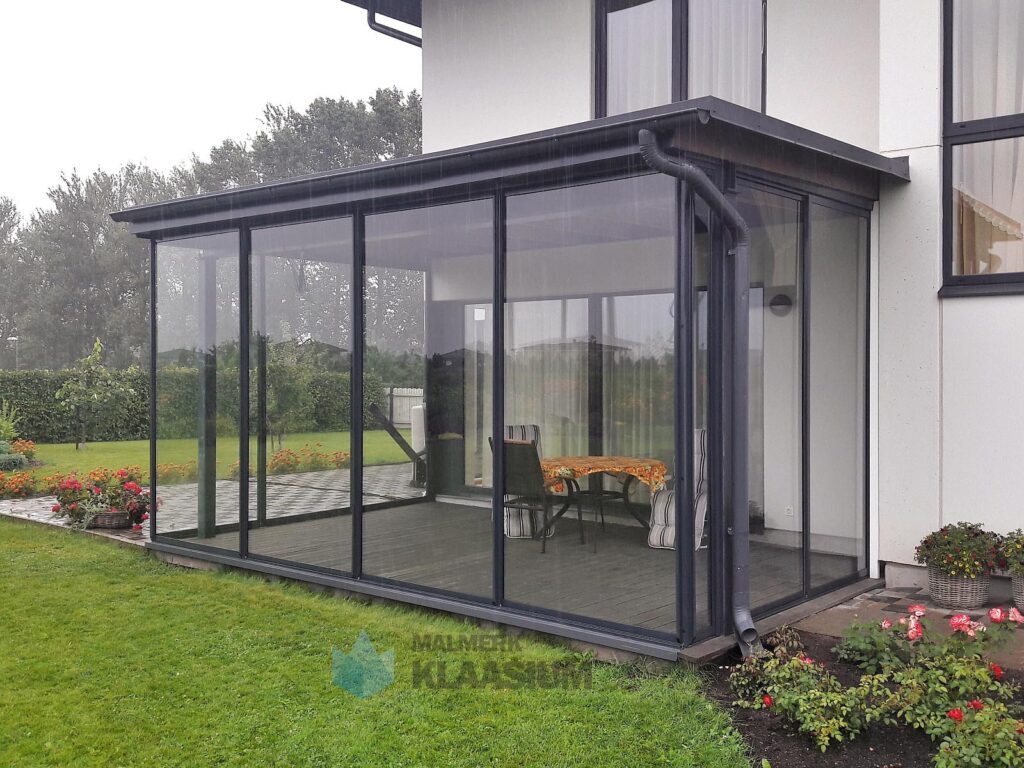
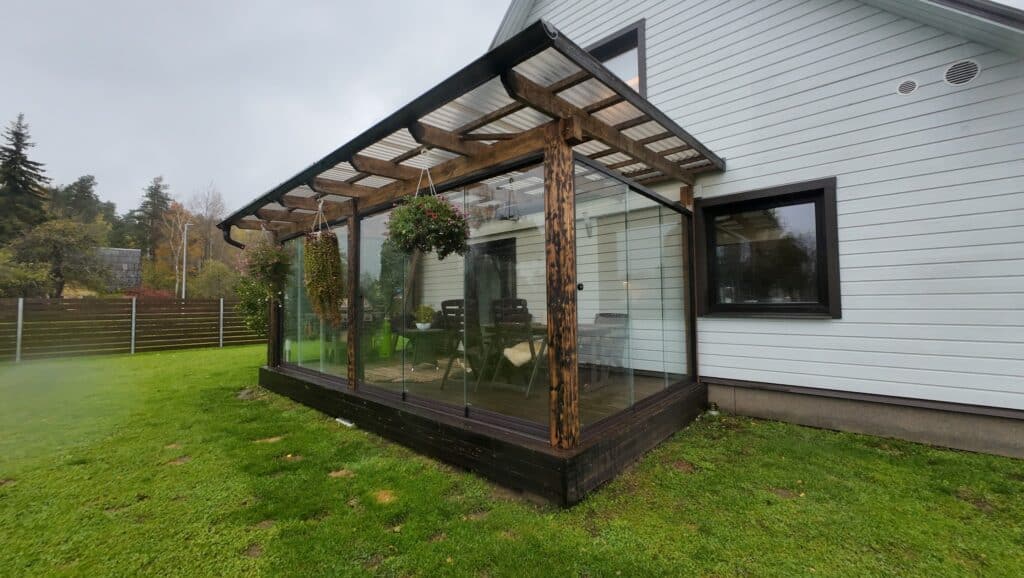

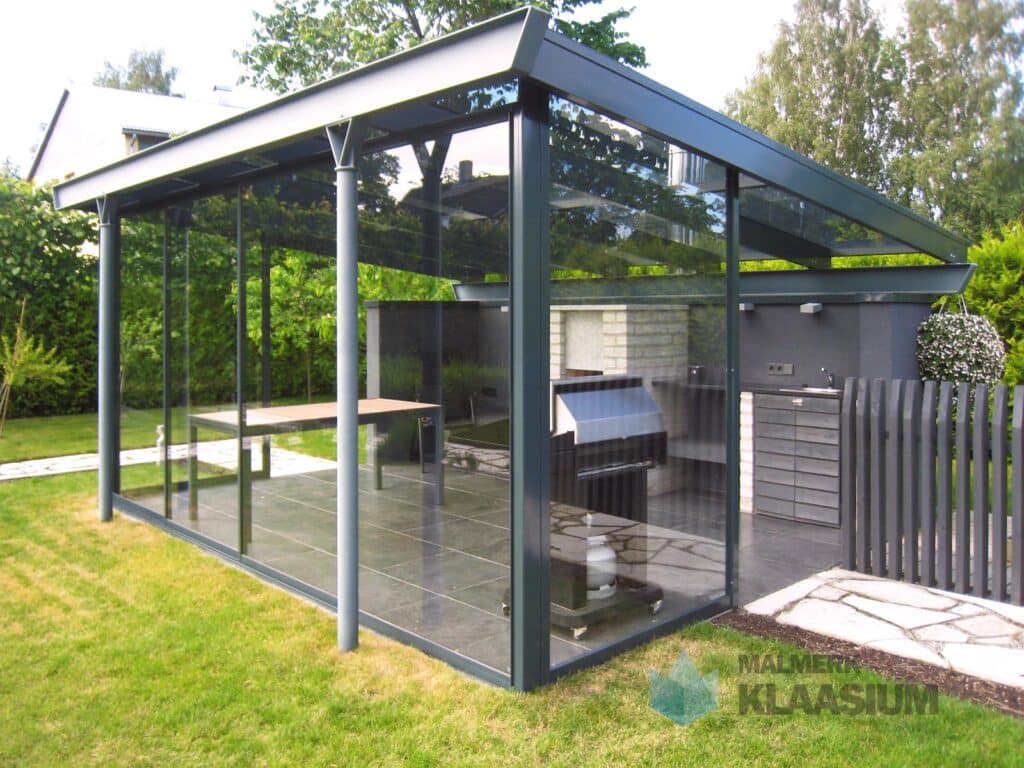
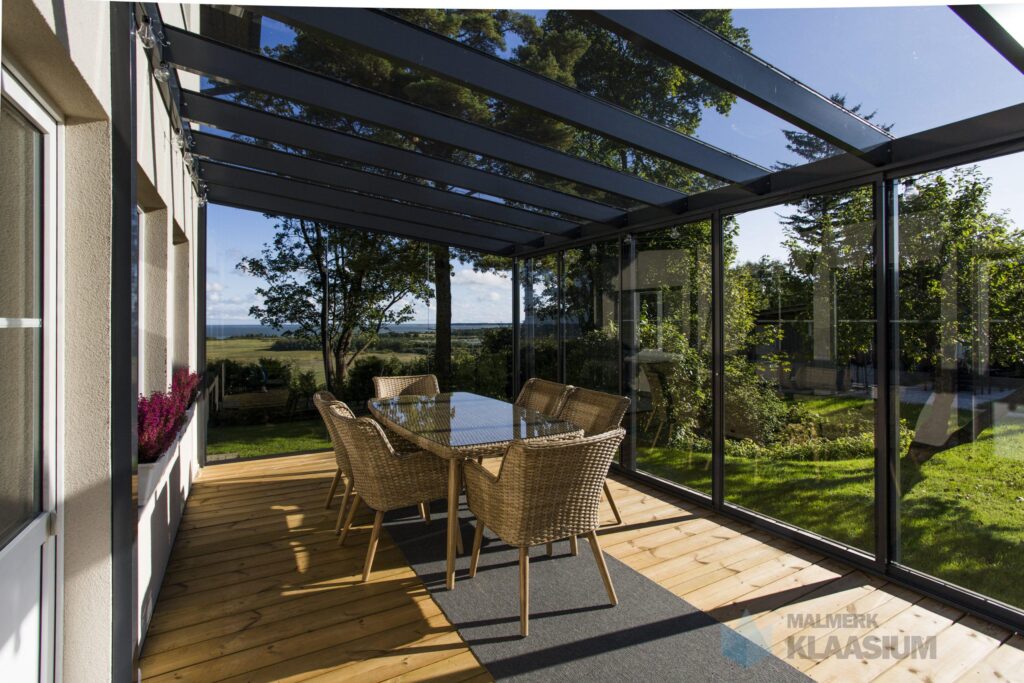
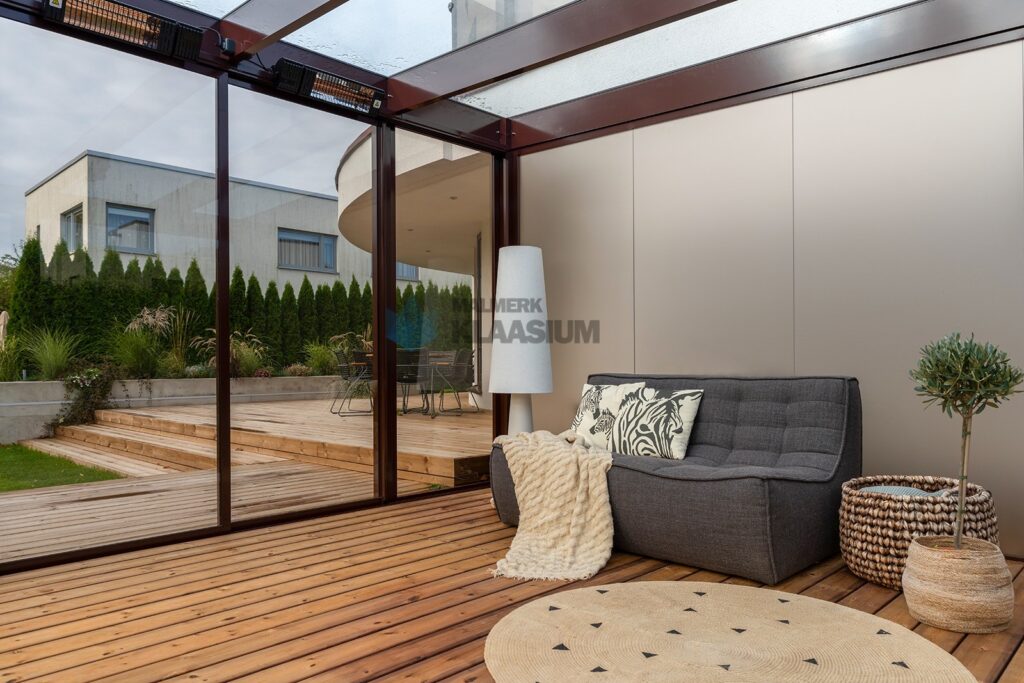
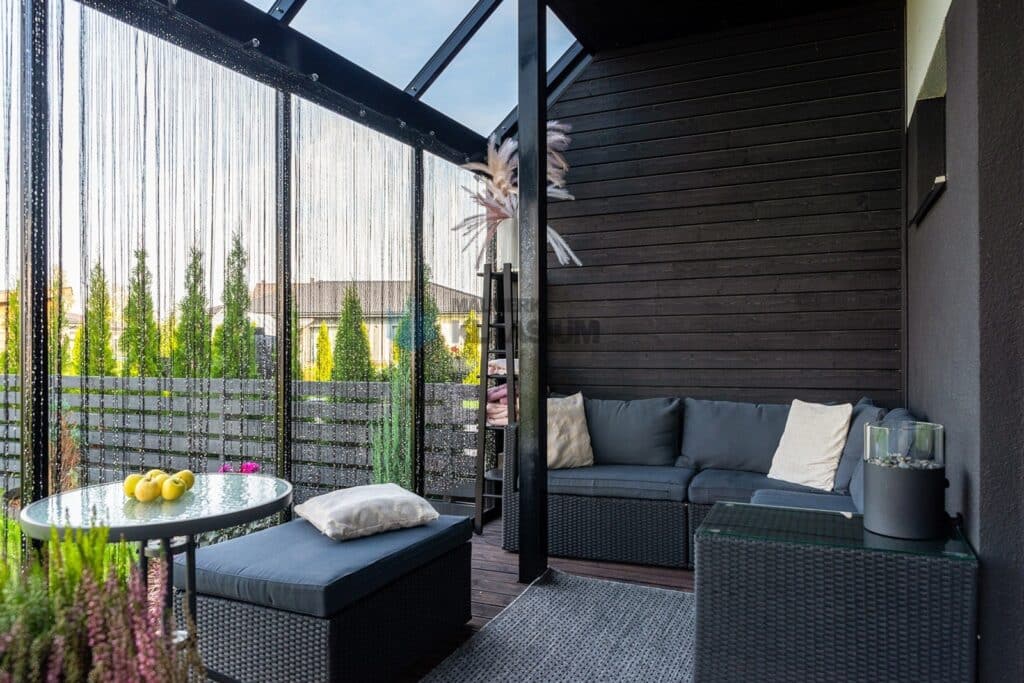
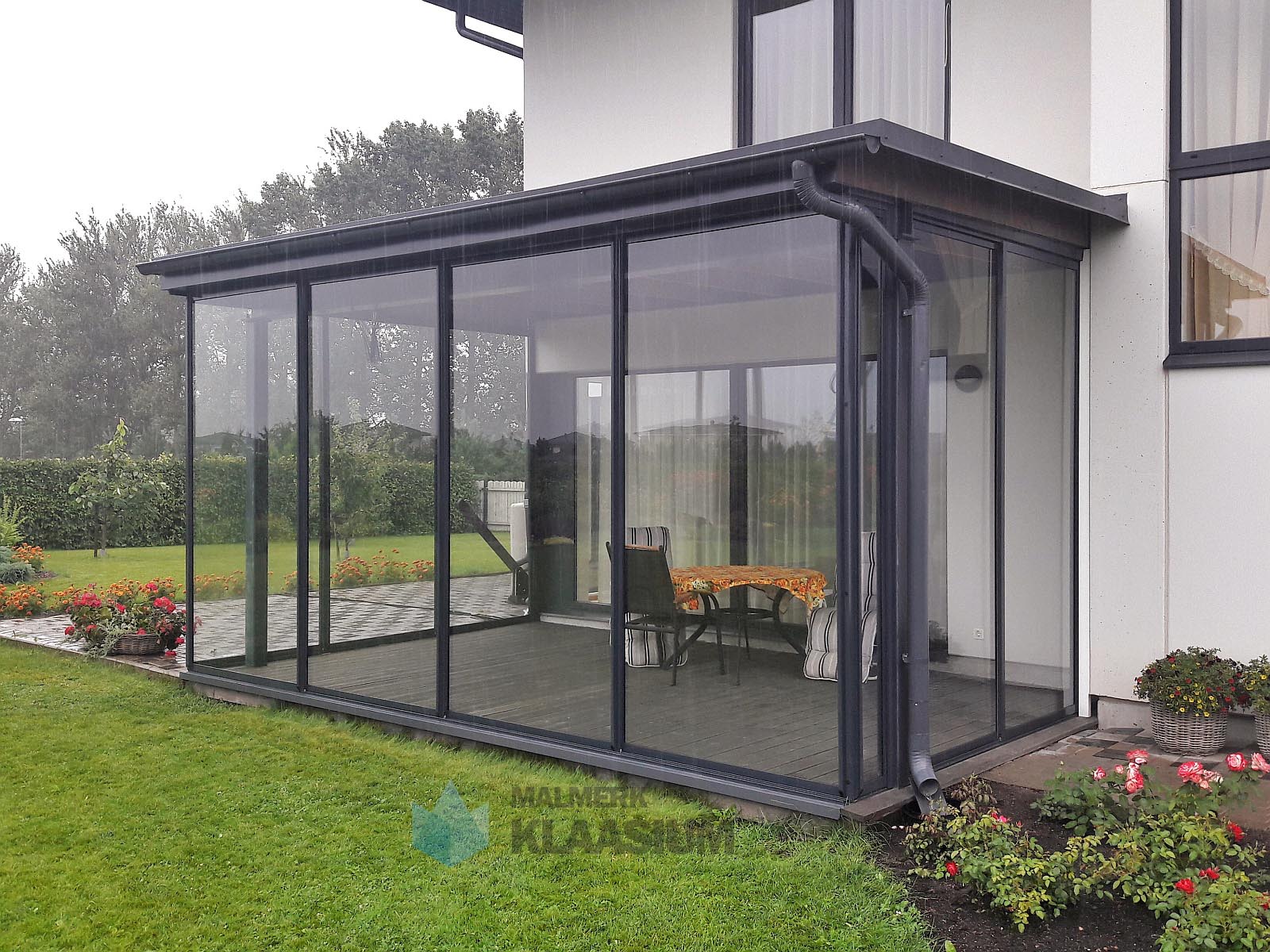
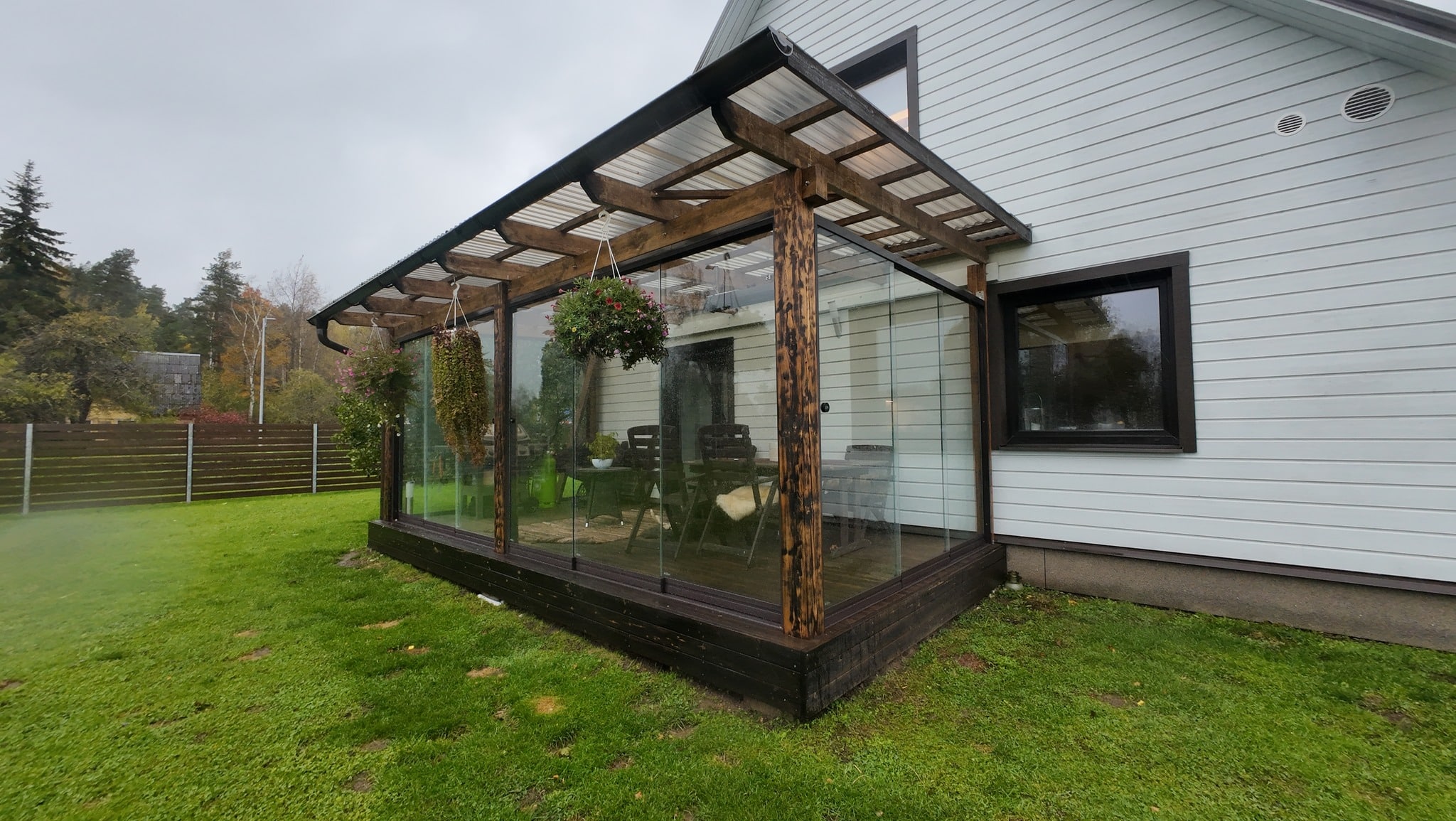
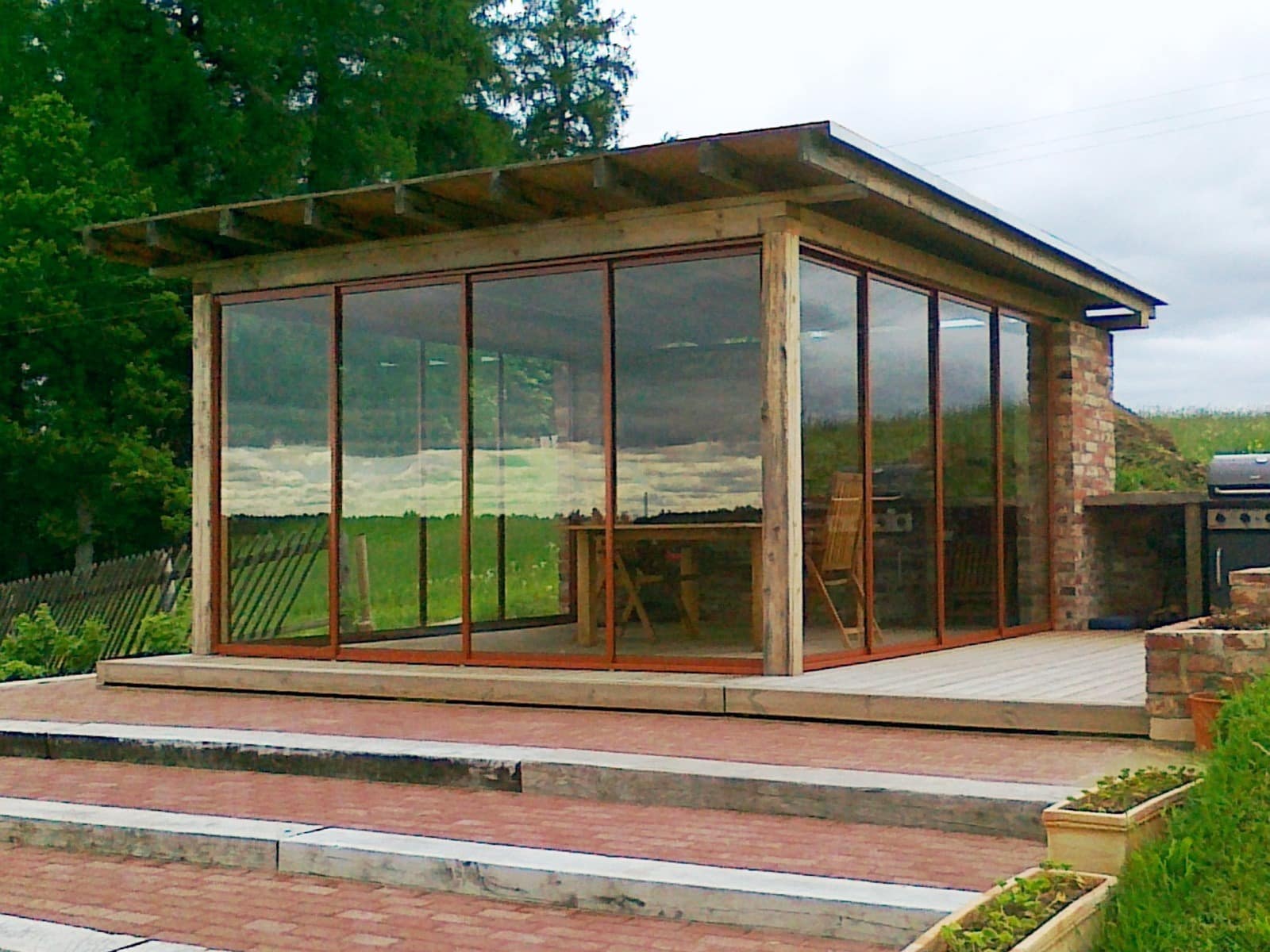
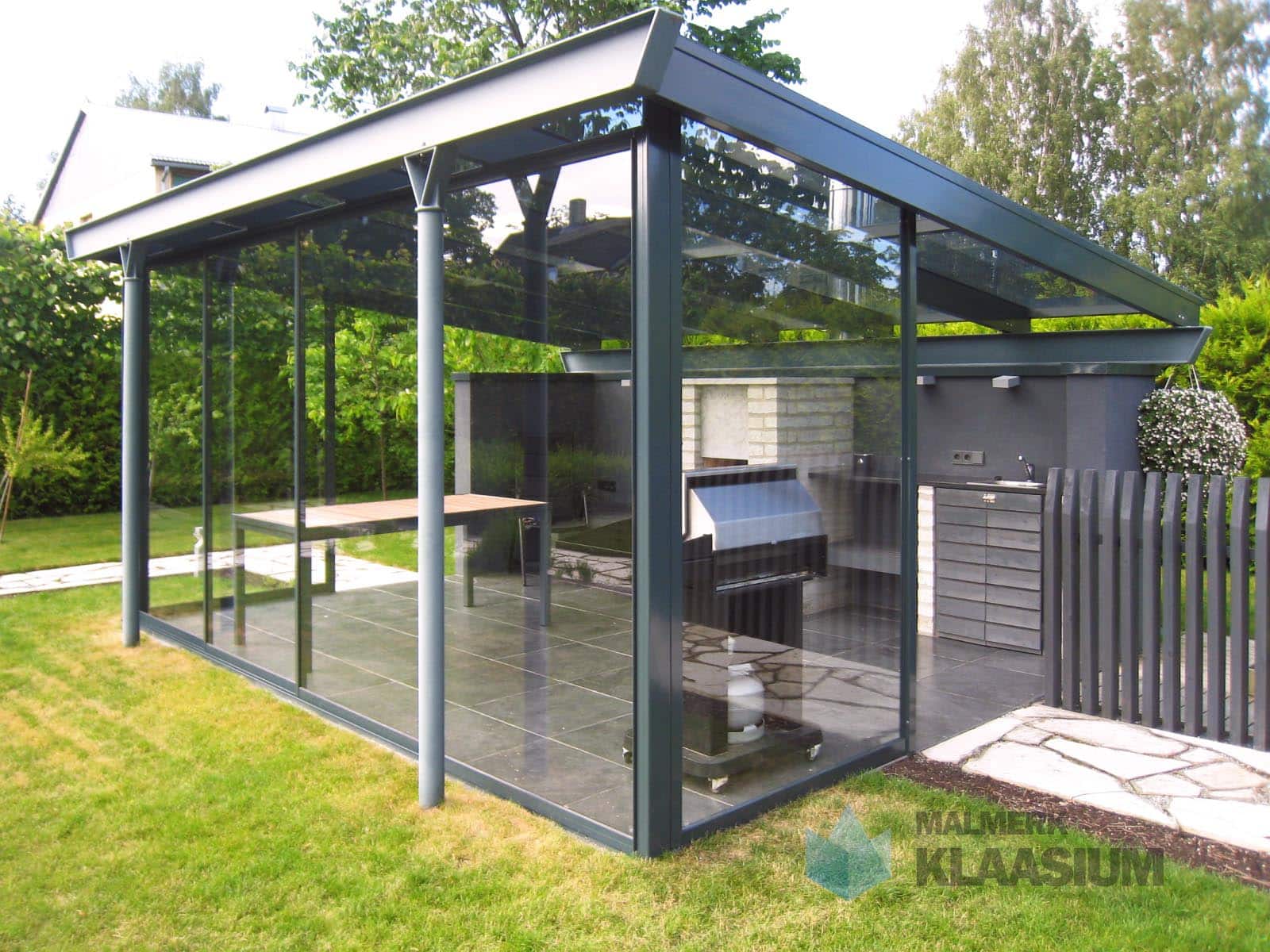
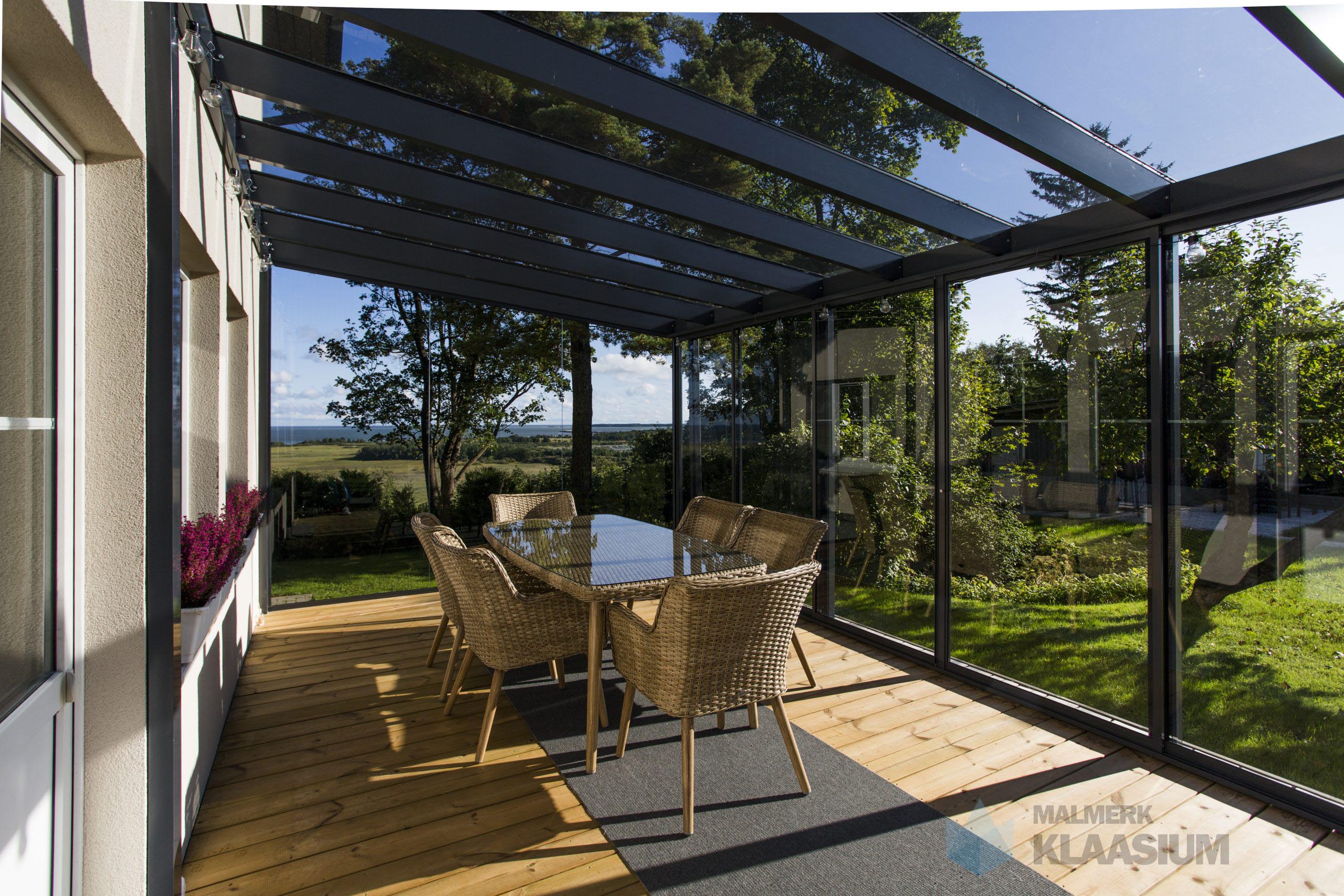
How to order a winter garden?
- First, send us an enquiry with the dimensions of the planned winter garden.
- Based on the information received in the enquiry, we prepare an initial price offer for the client.
- If the client agrees with the initial price offer, we arrange a suitable time for the on-site measurement and our specialist comes to measure the winter garden.
- On that basis we prepare the final price offer; if accepted, we sign a contract with the client and send a prepayment invoice for 50%.
- Once the prepayment has been received and the contract signed, we begin ordering materials.
- Before installation, the client is contacted and a suitable time is agreed for carrying out the work.
- The installation work is carried out, after which the client pays the second instalment (50%).
A winter garden has endless possibilities for use
A winter garden is a pleasant place to celebrate various events such as birthdays, wedding receptions, board game evenings and the like, and it also offers relaxation opportunities (yoga and meditation, a reading corner, a children’s play corner and more).
A practical herb garden in the warm season
A light-filled winter garden is an excellent place for germinating and growing plants. Put basil, parsley, dill, thyme, chives, onions and more into pots. That way, when preparing food, you never have to walk out to the vegetable patch — you simply step from the kitchen into the winter garden and pick what you need.
A wonderful place for dining
As warmer weather arrives, the desire to eat more fresh food often grows. On one hand, the winter garden lets you enjoy the fruits ripening there as early as possible; on the other hand, you can set a dining table in the winter garden for your family or guests. Thanks to the flexible solution, you can fully open the winter garden in fine weather, making it feel like dining outdoors — while always being ready to close the glass quickly and easily to protect the table from wind and rain.
A winter garden is excellent for both leisure and work activities
Complete work tasks, read a book, browse the internet, play board games, paint, meditate, do yoga or lift dumbbells — the possibilities are endless. You probably have a dream of everything you would like to do in your own winter garden.
What winter garden solutions does ATKA Klaaskoda offer
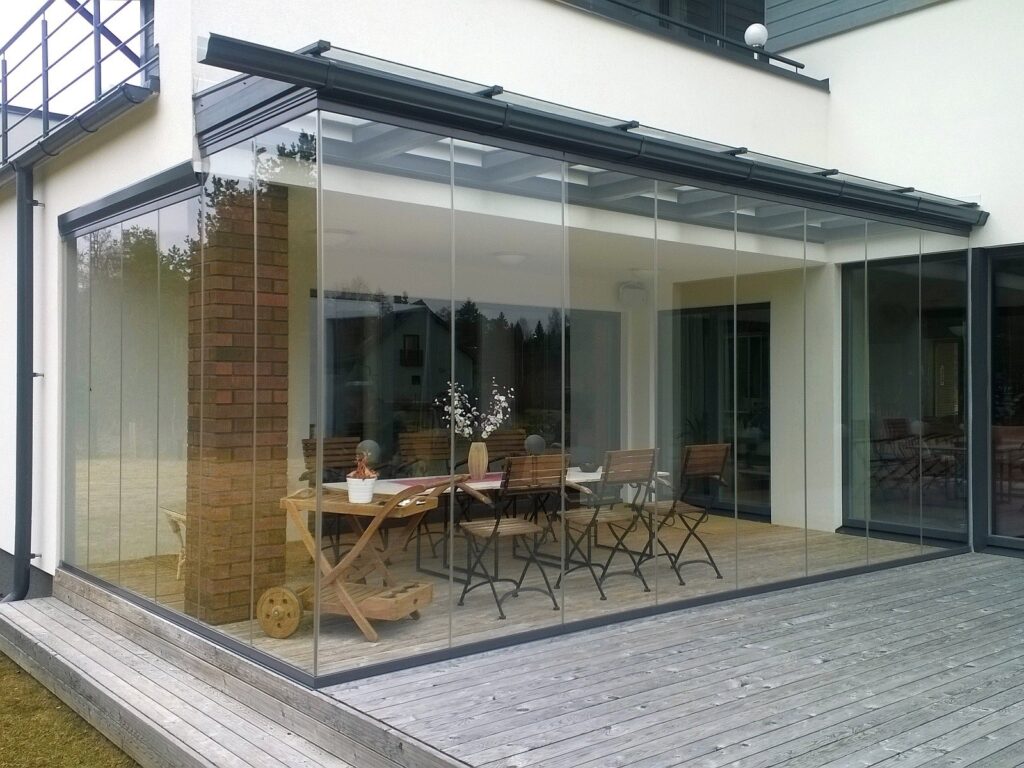
ATKA Klaaskoda offers seasonal single-pane glass solutions for winter gardens from the product range of partner Malmerk Klaasium — the walls consist of openable terrace glazing panels. Seasonal does not mean cold: the winter garden is pleasantly warm in sunshine from early spring. On cooler days a supplementary radiator can make the room even more comfortable. In summer, tinted roof glass takes care of a comfortable temperature — it removes excess solar heat without making the room dark.
What to take into account with a winter garden:
- The maximum roof rafter length of the house should remain between three and four metres.
- The winter garden frame structure is made primarily from 50×50, 100×50, 150×50 and 200×50 mm aluminium square tubes.
- The surface is finished with powder coating, which can be selected from the RAL colour catalogue.
- The completion time for a winter garden is approximately 10 weeks (solution approval, contract signing and order fulfilment time).
Winter Gardens FAQ
Winter garden price — indicative scale
A winter garden is bespoke work — the final price is always determined after a free on-site measurement and a tailored quote. As a rough guide, our non-insulated glass winter gardens have ranged from approximately 8,000 € to 40,000 €+.
The single biggest driver of cost is the number of sides that need glazing — two sides for a corner position against the house, three sides when built along one wall, four sides for a free-standing structure. The glazing system, overall height and any additional work (foundation, tiled floor, fireplace corner — all carried out by us) also play a significant role. Larger winter gardens typically have a lower cost per square metre, as fixed costs are spread over a greater area.
Send us your project details and we will find the right solution and price for you. Request a quote · Read more about winter garden pricing.


