
Terrace Glazing
Terrace glazing allows you to turn your terrace into a weather-protected usable space, keeping the area clean and reducing heating costs. It is suitable for extending private homes, summer cottages and commercial premises such as restaurants. A glazed terrace is a pleasant place to spend time, allowing you to extend the enjoyment of summer well into late autumn.
In addition to being very practical, terrace glazing gives you an interesting and versatile extra room for the spring and summer season, along with a wealth of possibilities at home.
What is terrace glazing and when is it worth it?
Terrace glazing turns an open terrace into a more weather-protected space: less rain, wind and leaves, and a longer season from spring to autumn. Suitable for homes, summer houses and commercial spaces. Options include framed sliding, frameless sliding and folding systems — all Malmerk Klaasium systems are top quality in their class.
Framed or frameless — which should you choose?
Framed sliding is strong and wind-resistant; frameless sliding and folding give a more open, almost frame-free view. The choice depends on opening width, height, wind load and preference — not “cheap vs premium”. Comparison article.
How much does terrace glazing cost?
Indicative ranges: a smaller framed terrace about €800–€1,400, mid-size €1,400–€3,000, large from ~€3,000+; frameless is typically ~30–40% more. Prices are approximate and depend on dimensions — final sum with a quote. Terrace glazing price.
A good terrace has many uses
- Shared meals with family and friends. On a glazed terrace you can enjoy meals together with family and friends regardless of the weather.
- Parties and events. A glazed terrace is ideal for holding birthday parties and other celebrations. You no longer need to worry about what the weather will be like on the day of the event.
- Children’s play area. On rainy days, children can play on the veranda and spend time “almost outdoors”.
- Mini herb garden. Grow herbs and flowers on your glazed veranda. Through the glass they receive far more of the sunlight they need than they would on a windowsill.
We carry out terrace glazing work all year round!
Terrace glazing solutions
Framed sliding glass
An easy-to-install system in which glass modules slide smoothly behind one another. Framed terrace glazing is resistant to harsh weather conditions, easy to maintain and suitable for practically any terrace. The lower guide rail is approximately the width of one terrace board, so it can easily be “recessed” into the floor.
Frameless sliding system
A system in which frameless glass modules slide along upper and lower guide rails behind one another. Suitable for practically any terrace that has a stable base. The frameless sliding glass has a uniquely low 9 mm bottom profile, which allows comfortable use without the need to “recess” it into the floor.
Frameless terrace glazing
The product is identical to the balcony glazing system and gives a very beautiful, airy result because there are no vertical profiles. The glass panels open like the pages of a book towards the wall, making it possible to open the entire terrace as one. The lower guide profile can also be “recessed” into the floor.
For the glass you can choose between single tempered clear or tinted glass. Aluminium profiles are powder-coated according to the RAL colour catalogue. Locking can also be added to terrace glazing on request.
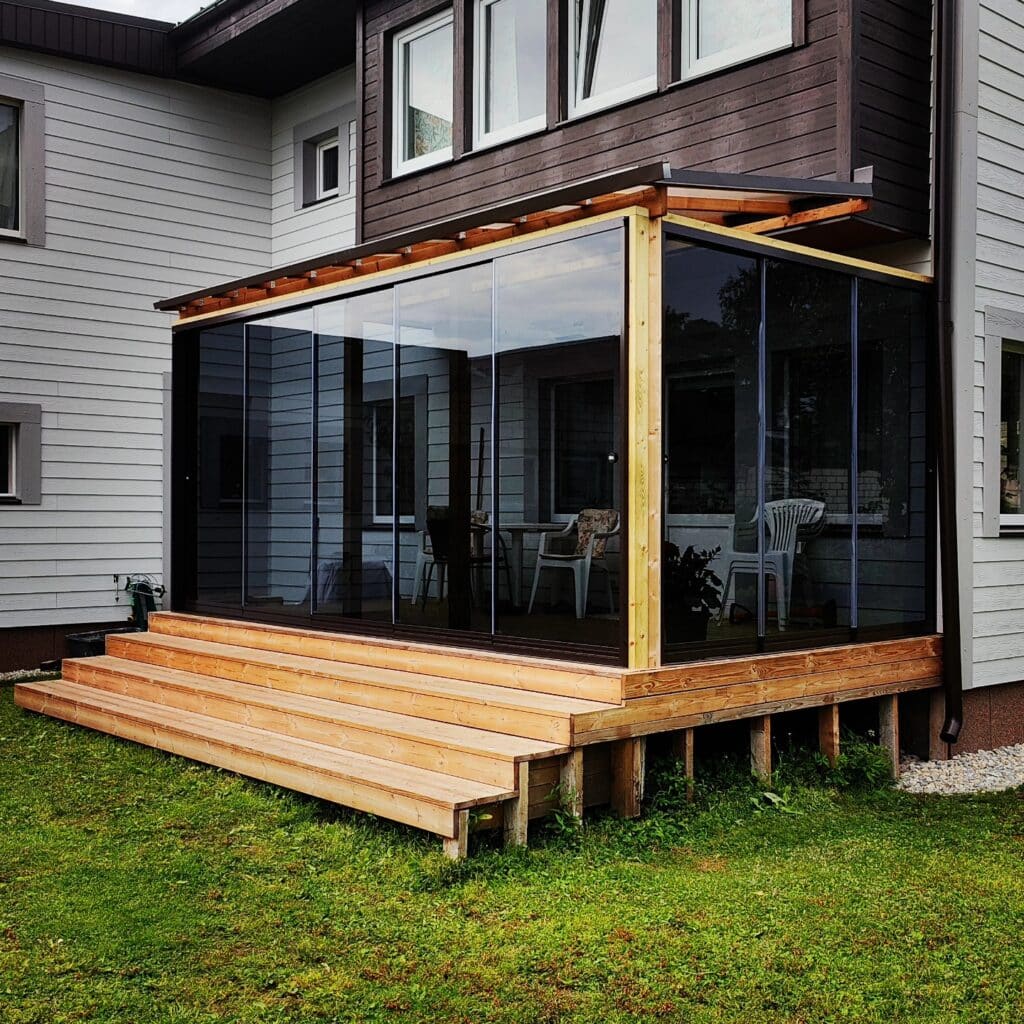
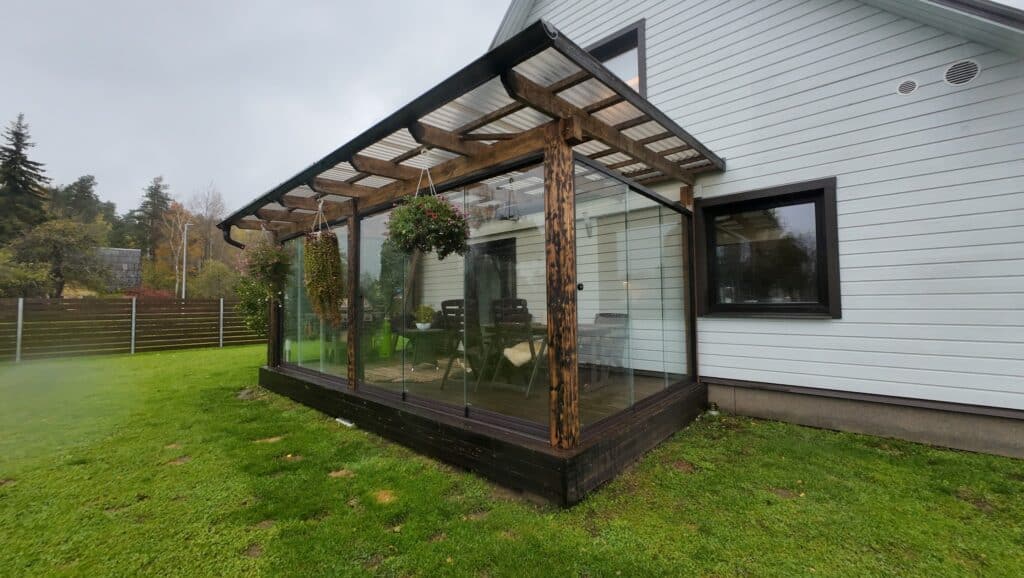
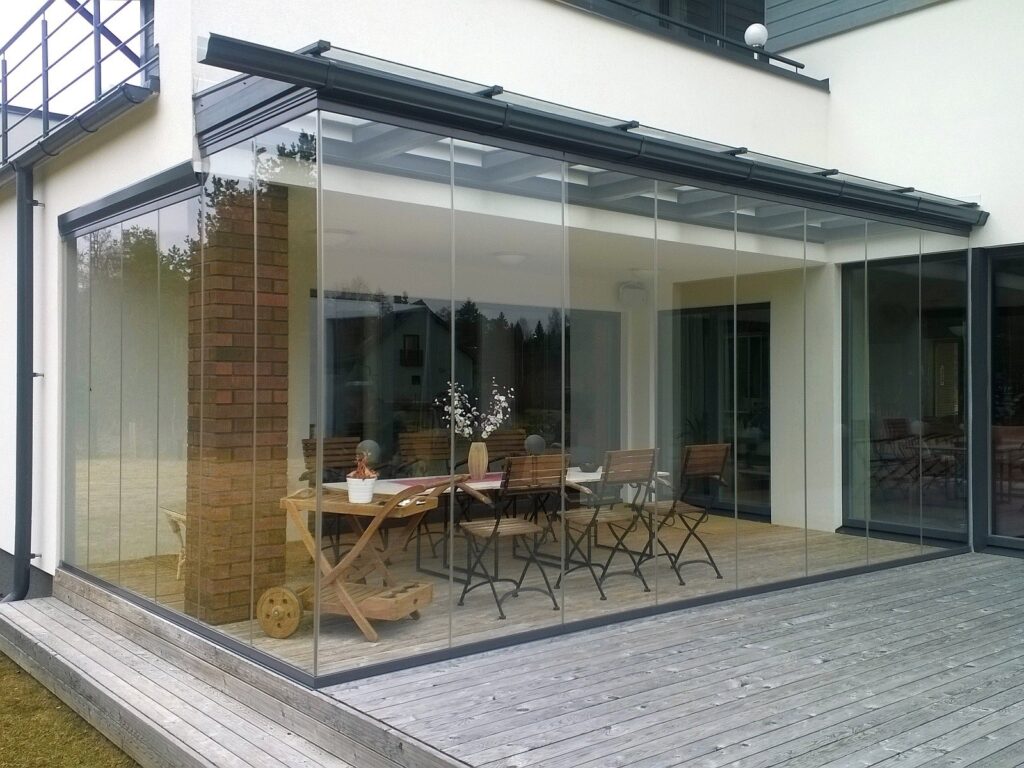
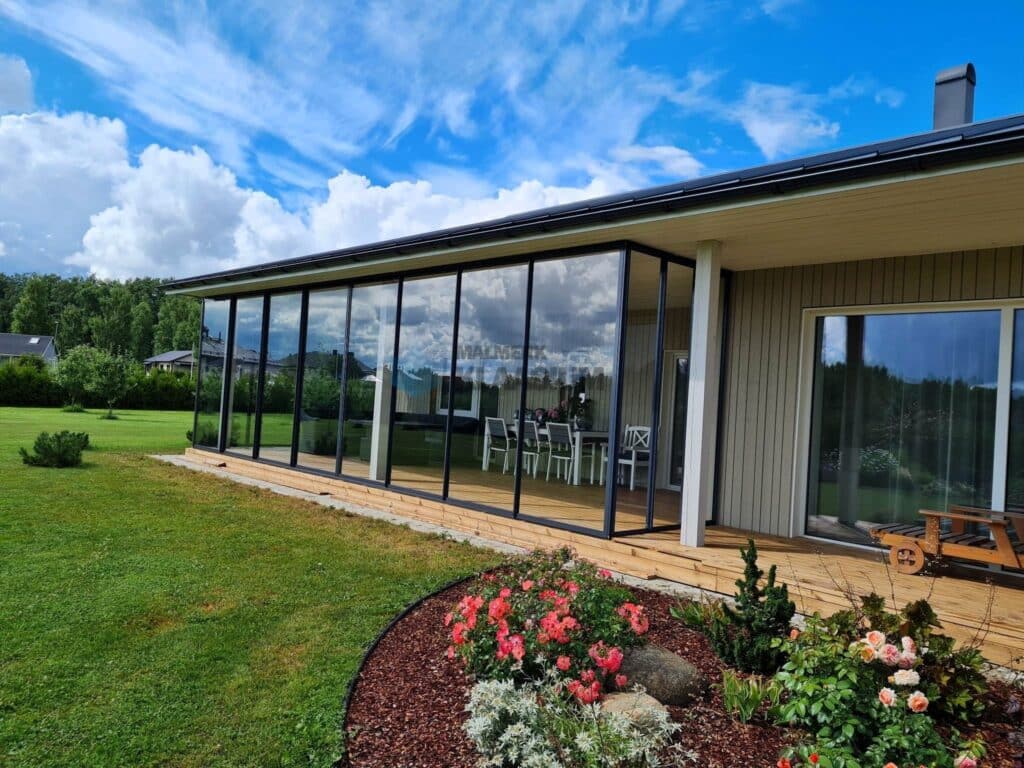
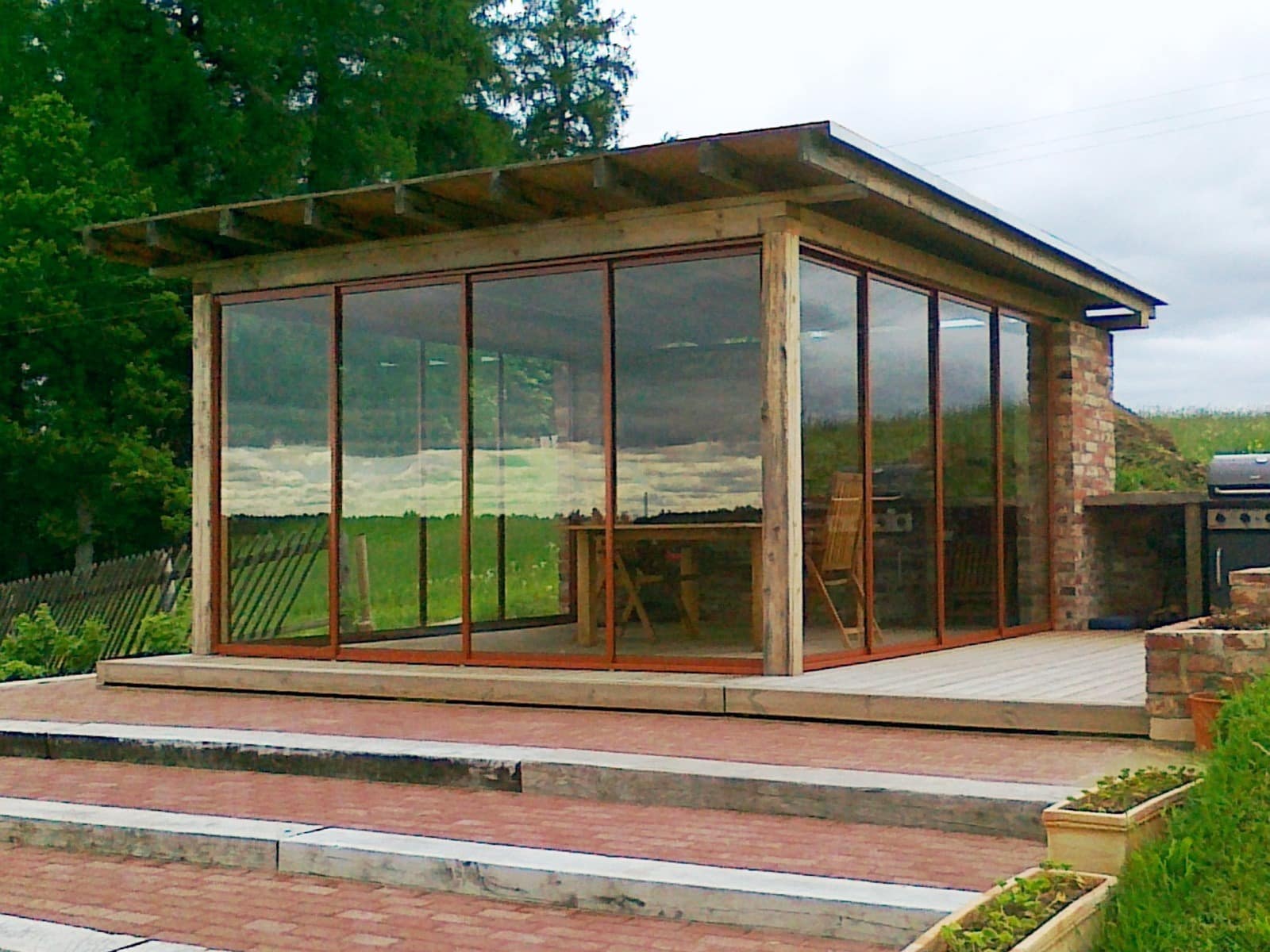
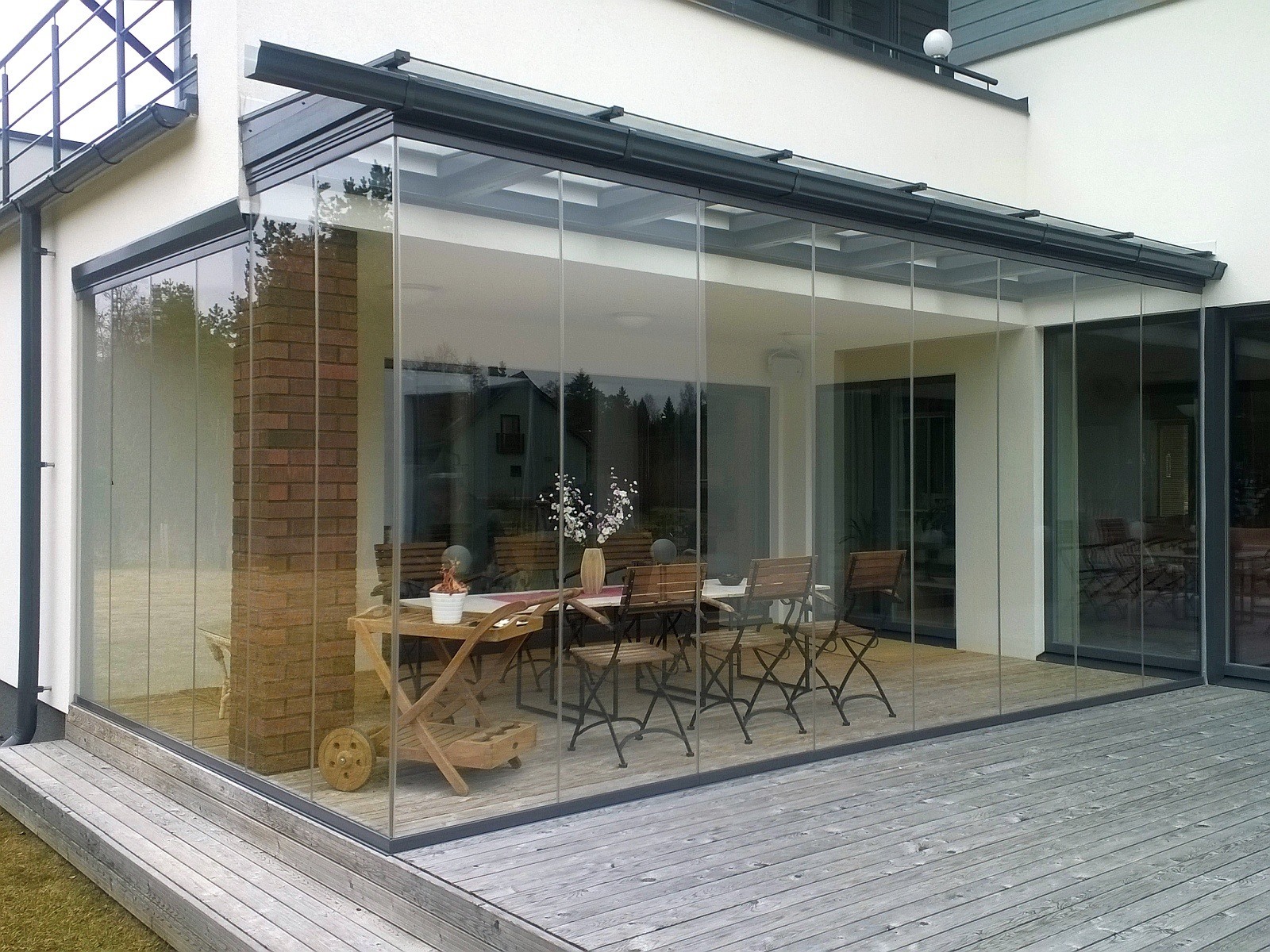
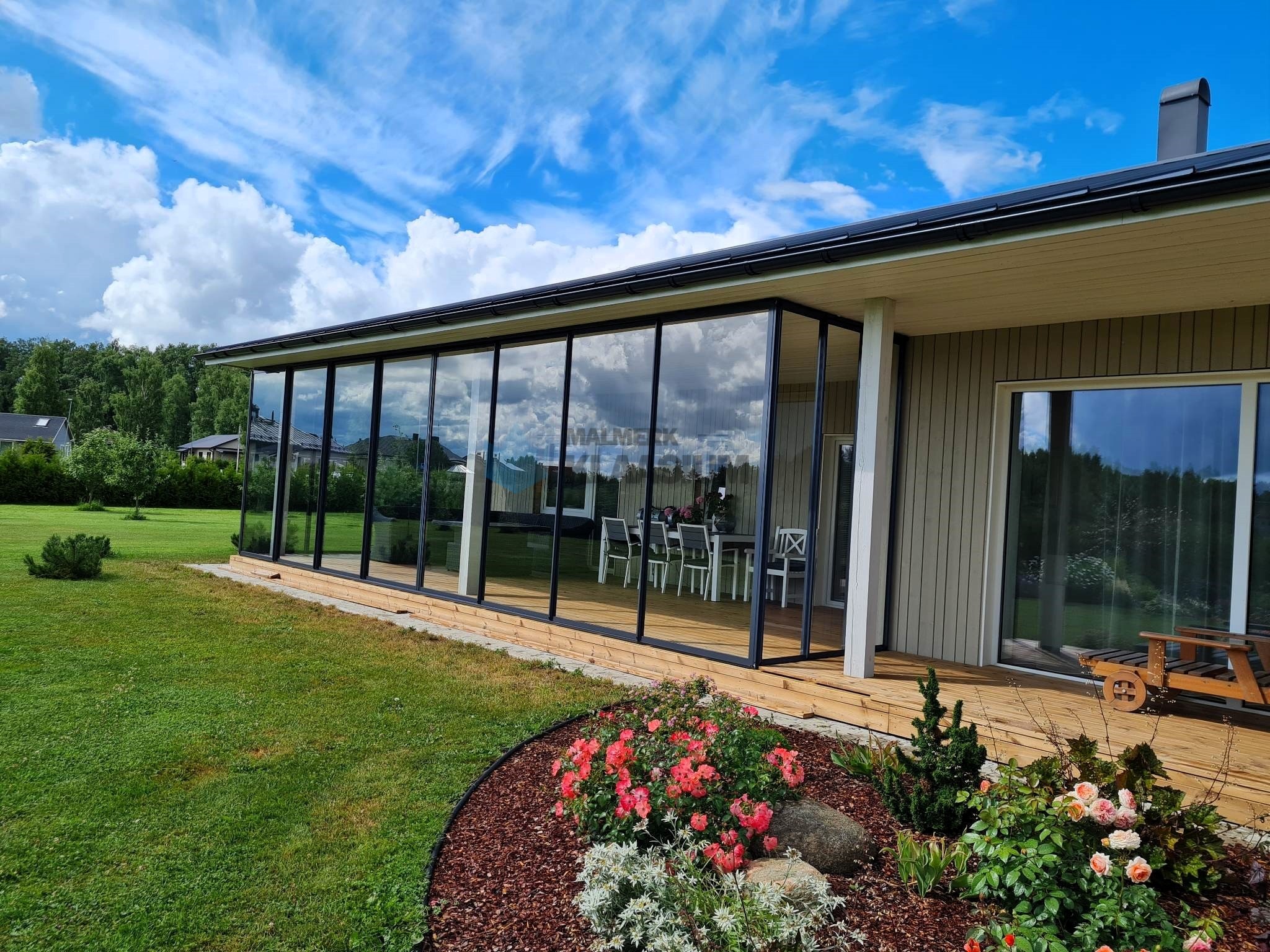
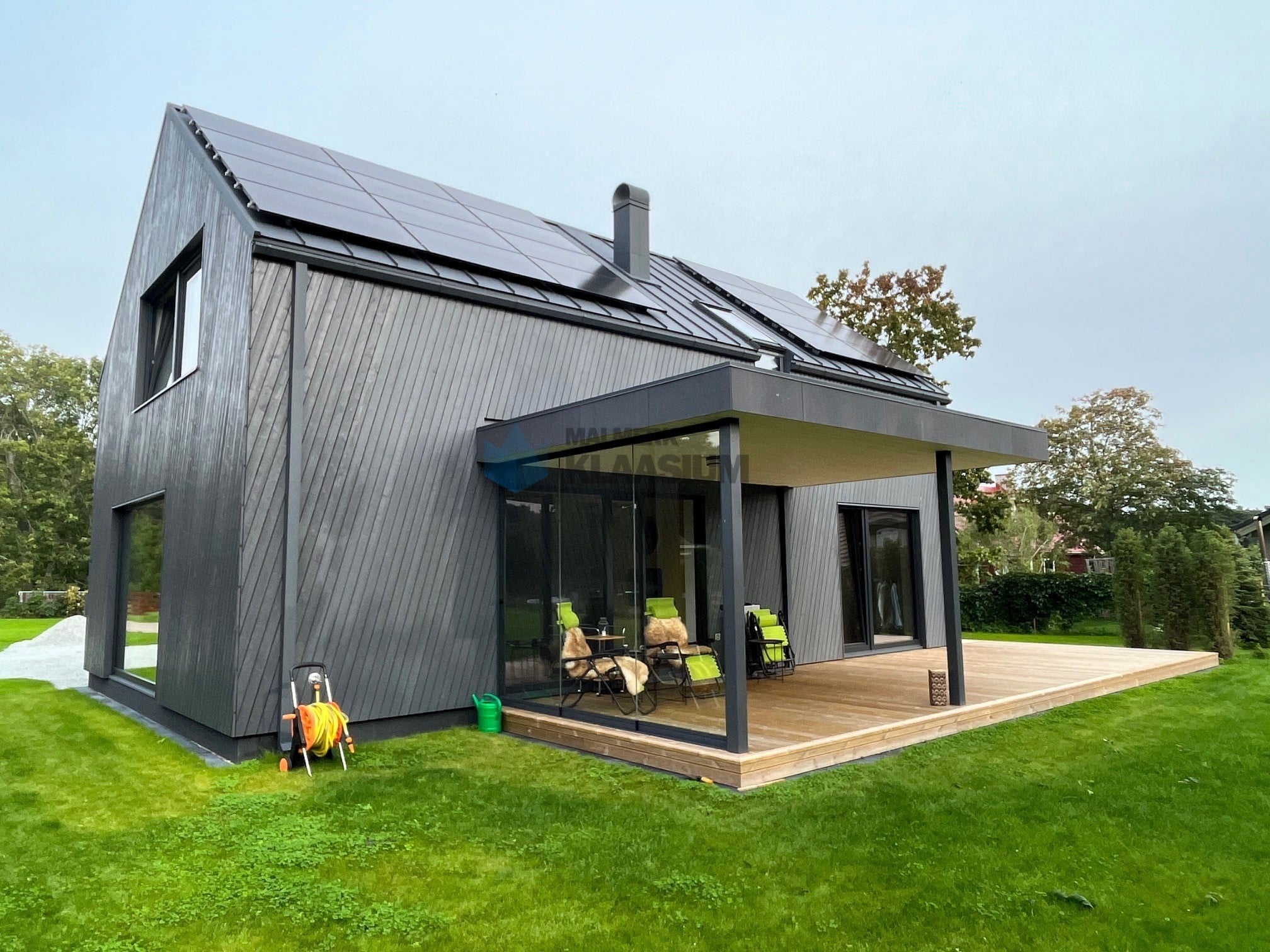
Completed Terrace Glazing Projects

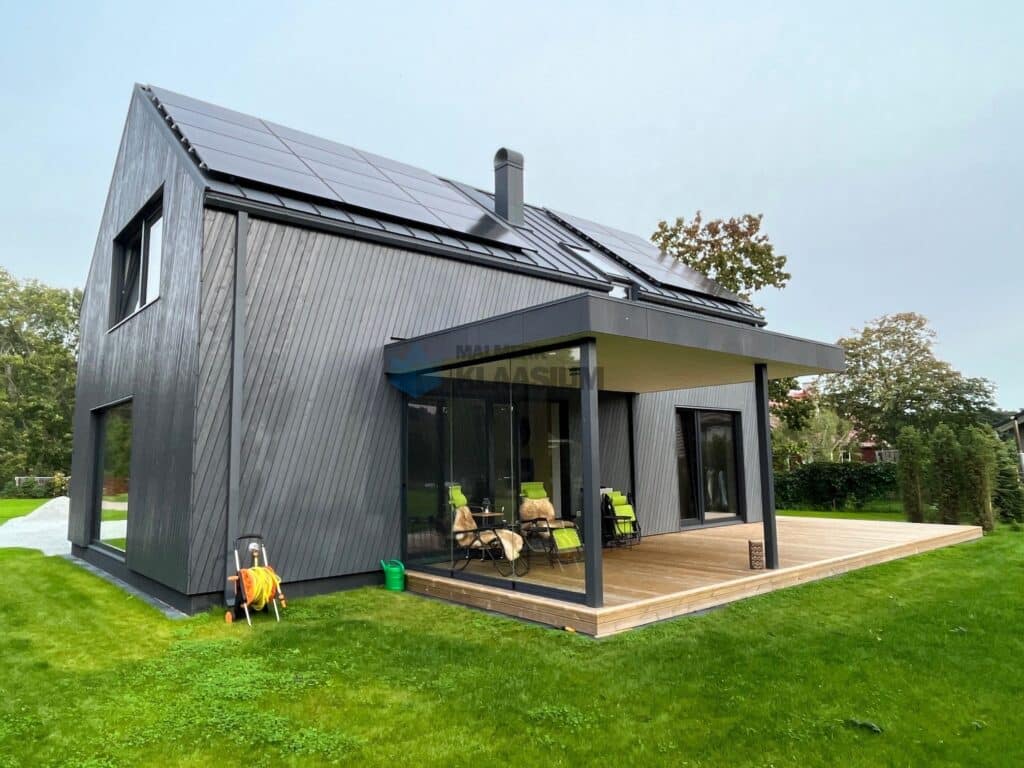
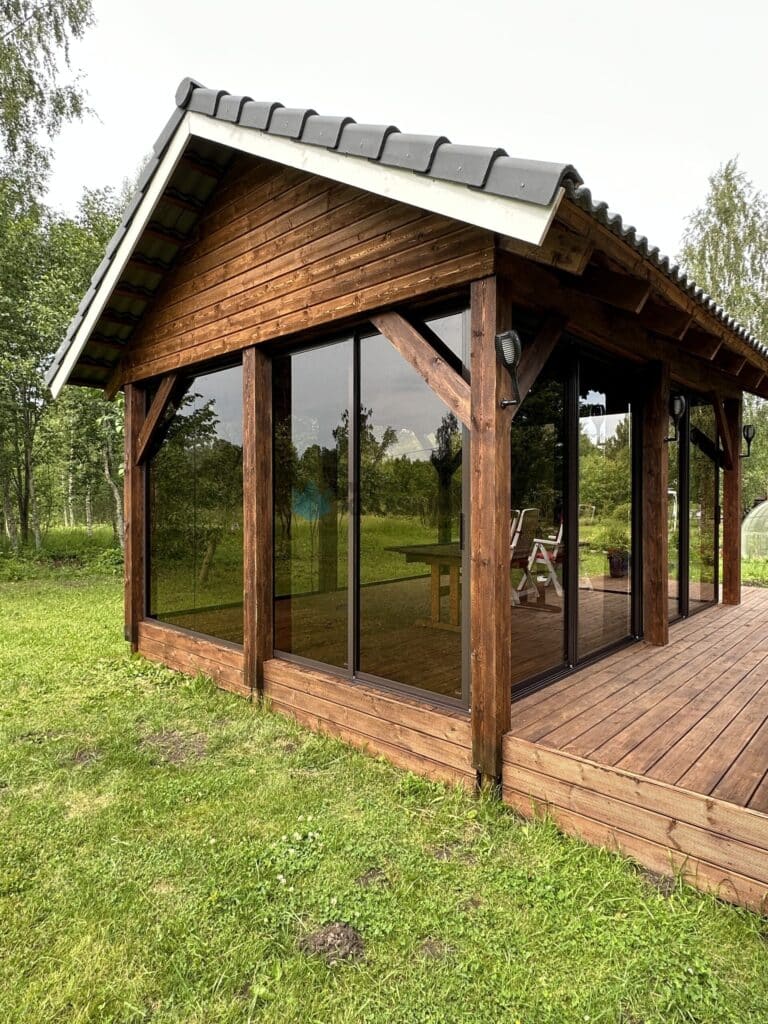
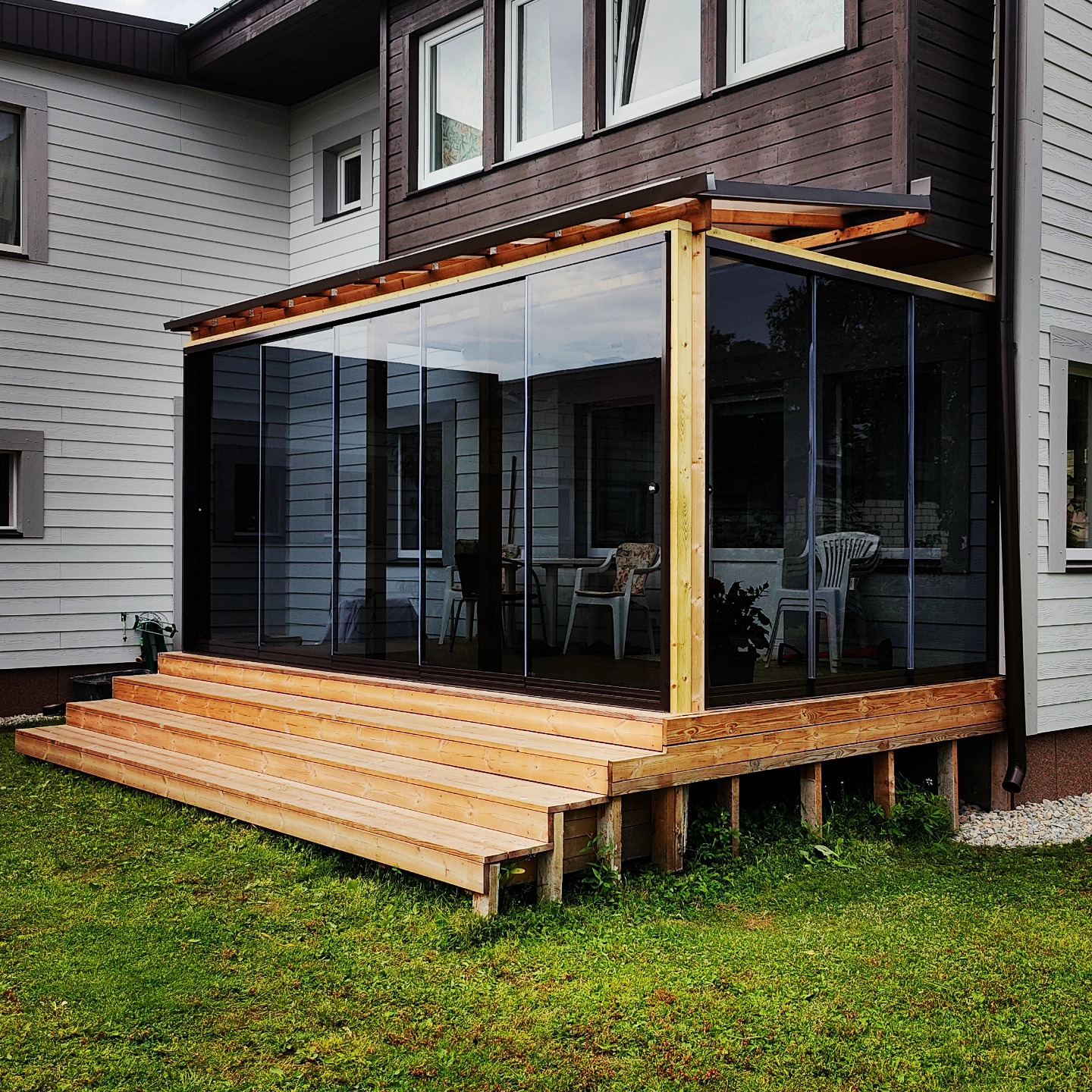
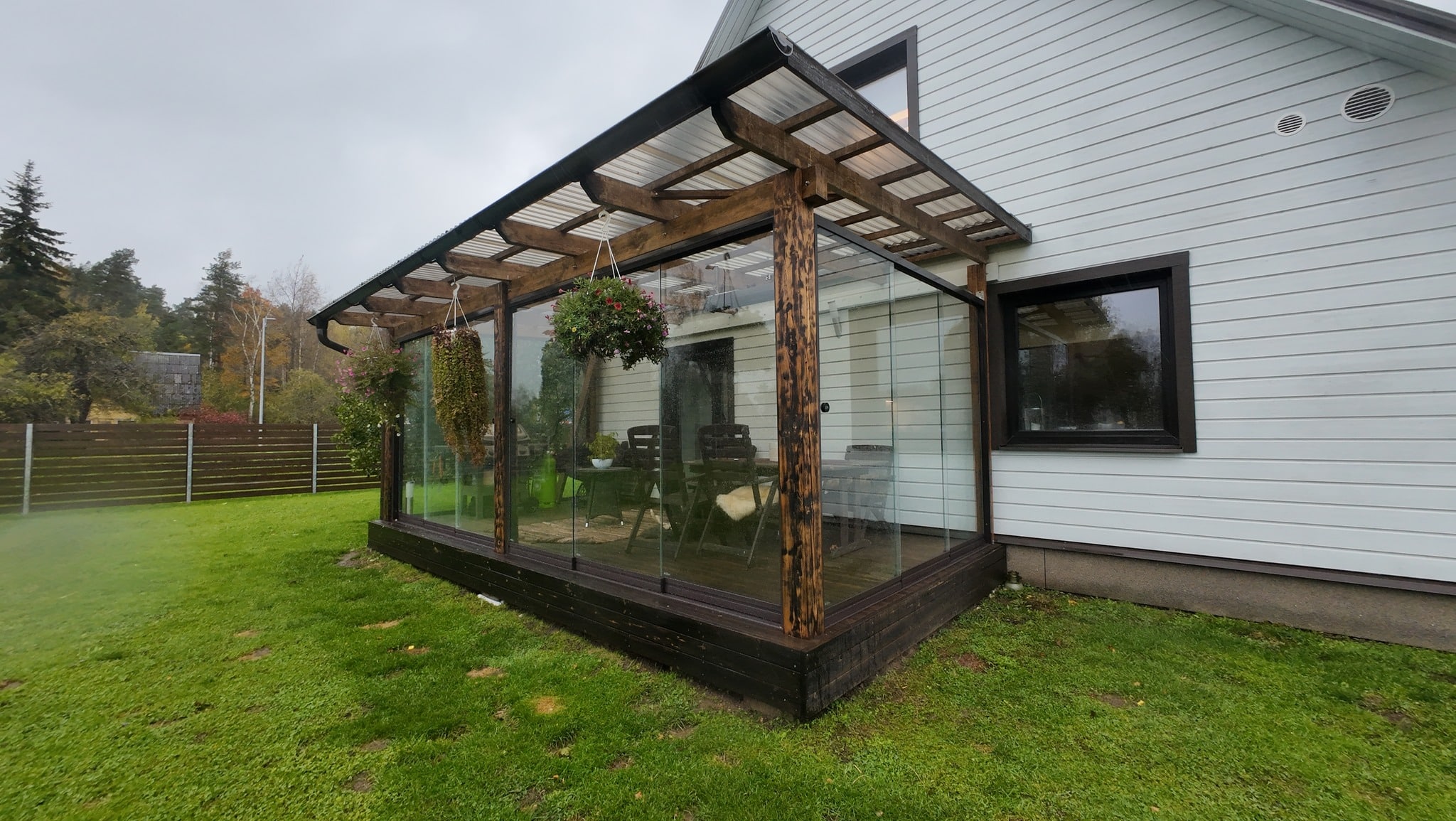
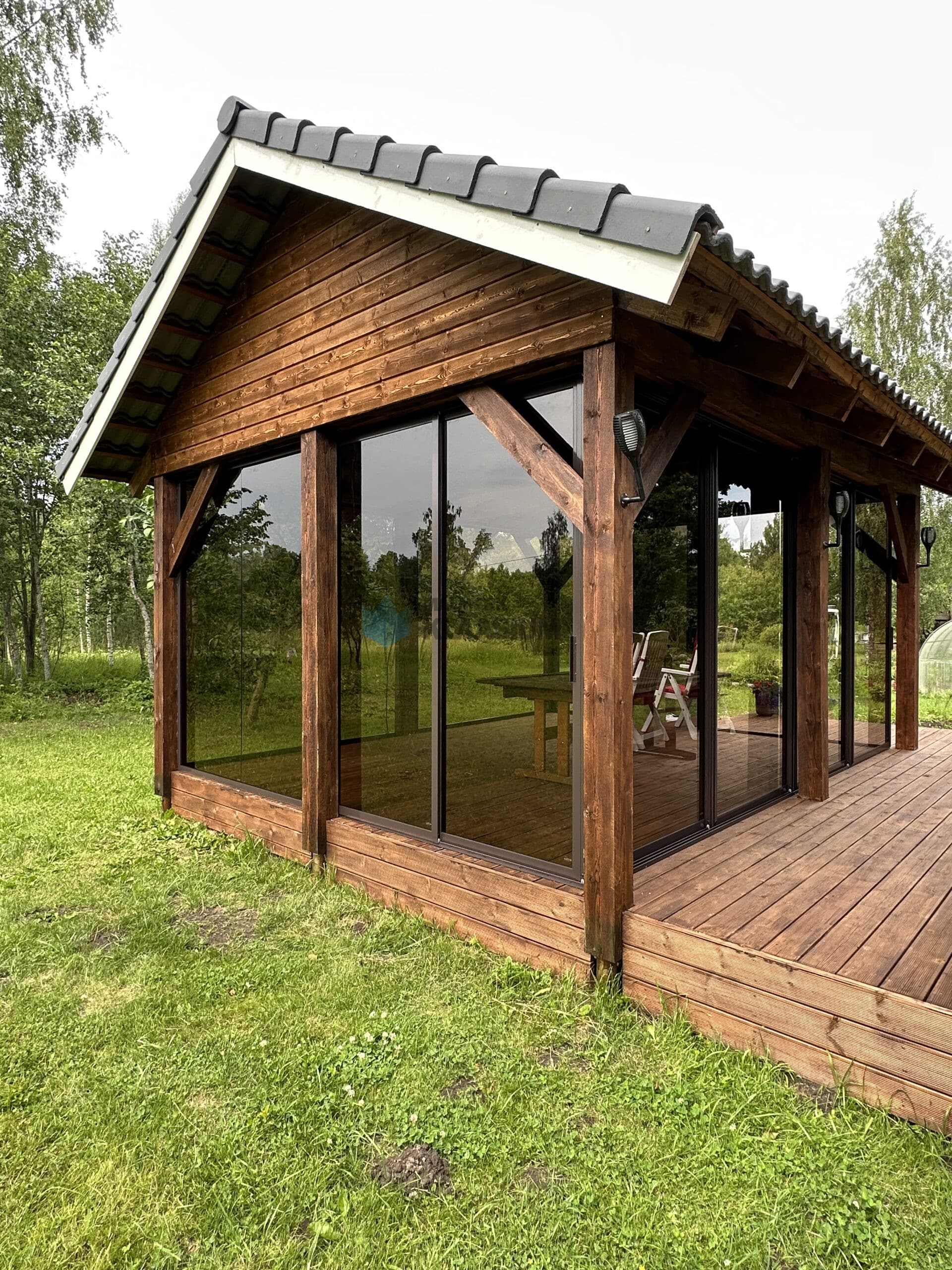
Advantages of terrace glazing
Given Estonia’s changeable weather, it is very useful to glaze your terrace. Terrace glazing protects surfaces against rain, wind, snow and dust. A glazed terrace is also economical, as it helps reduce heating costs and, as an added bonus, significantly cuts street noise. Terrace glazing has a modest appearance and suits all types of houses without altering the overall exterior of the building while adding a sense of openness.
Cool summers have shown — those whose terraces are protected by glass can enjoy the sunshine throughout the whole summer without worrying about which items on the terrace the wind might blow away. Terrace glazing also protects against dust and debris, which in practice means that the dining table on the terrace does not need to be cleaned before each use, nor is there a constant need to sweep the floor.
In addition to keeping out dust, terrace glazing also protects against annoying insects — mosquitoes, horseflies and wasps — which is especially important for those who love sitting on the terrace in the evenings, as well as for those who react more sensitively than usual to insect bites. It can sometimes be equally important to prevent birds from accessing the terrace, as some birds that have grown accustomed to people can cause considerable trouble.
Glazing also extends the lifespan of the terrace. The greatest concern for maintaining terrace surfaces is large temperature fluctuations. In summer a terrace can heat up to +30°C, and intensive sunshine turns wooden surfaces grey. In winter, temperatures can drop to -30°C, where moisture that has accumulated in wooden surfaces freezes and may cause cracking as it expands.
However, the most challenging period is spring and autumn, when temperatures fluctuate with a wide amplitude and quickly. Weather conditions naturally bring precipitation and other aggressive environmental influences such as gases and dust, which fall onto the terrace together with moisture. Contact with moisture can lead to the spread of fungal and algae growth, which makes the surface look dull.
Glazing is also beneficial for growing plants, as it maintains a higher room temperature, extending the growing period for plants.
Where to start?
Building a terrace adds value to your home — a place to enjoy a morning coffee or watch the sunset. There are many ways to build a terrace, so the first step is to decide what the purpose of the terrace will be.
Once the intended use of the terrace has been established, a suitable location must also be chosen. Most people want the terrace connected to the building and positioned on the south-facing side, where there is maximum sunlight. Garden terraces are mainly situated next to residential buildings so as to be sheltered from the wind and dust.
To protect seating areas from the wind, people often construct wooden lattice screens, windbreaker walls, glass walls, or plant bushes and other plants. The most complete solution, however, is terrace glazing.
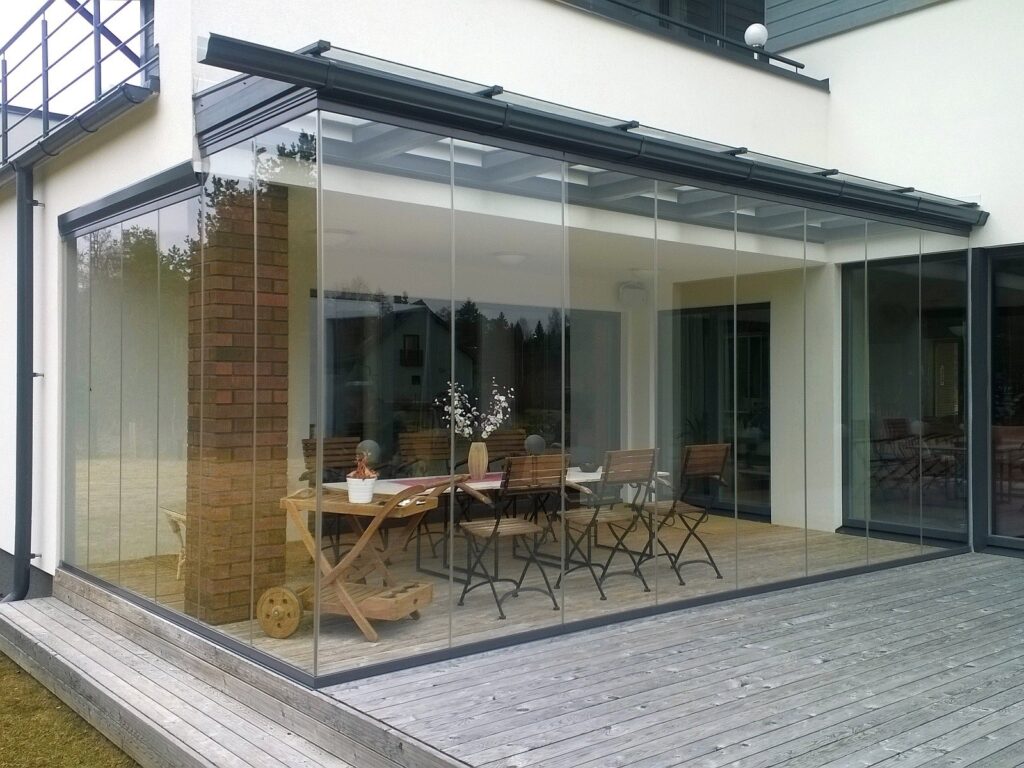
Both glass and aluminium are excellent materials for this purpose, being resistant to corrosion, UV radiation and fungal damage. Terraces use tempered glass, which is up to five times stronger than ordinary glass, and if an accident does occur, it breaks into small, non-sharp granules that do not cut the skin.
Framed vs frameless terrace glazing — which system to choose?
Terrace glazing comes in three main types and each system has its own strengths. The right choice depends on the nature of your terrace, the aesthetic you want and the degree of openness you expect.
Framed sliding glass
Framed sliding glass consists of aluminium-framed panels that slide behind one another along upper and lower profiles. It is the most common and versatile solution. The greatest advantage of the framed system is durability — the aluminium frame gives each panel rigidity, ensuring stable operation even under heavier wind loads. This solution is the least demanding on the structure: the permitted movement tolerance is ±7 mm, which means that even a terrace that is several years old can usually be glazed directly without rebuilding the structure.
In terms of maintenance, the framed system is the easiest — panels are simple to remove, sliding surfaces are easily accessible and, if necessary, an individual panel can be replaced without dismantling the entire system. Visually the frame is visible, but Malmerk Klaasium profiles’ slim aluminium frame does not dominate the view.
Frameless sliding system
Frameless sliding glass operates on the same principle — panels slide behind one another in the profiles — but there are no vertical frames. The result is a much cleaner and more modern appearance. Between panels there is only a thin joint and the view from the terrace outwards is almost uninterrupted.
The Malmerk Klaasium frameless sliding system has a uniquely low 9 mm bottom profile. It is so low that in many cases it is not necessary to recess the profile into the floor at all — it remains practically flush with the floor surface. The structural requirements are similar to the framed system (±7 mm tolerance), so this solution is also suitable for existing terraces.
Frameless folding glass system
Frameless folding glass is a premium solution in which the entire glass wall folds accordion-style and moves to the side of the wall. The terrace opens completely — in summer you can enjoy a fully open terrace as though there were no glass there at all. This is visually the most impressive solution and is especially suited to those who value maximally openable space.
However, the structural requirements for the folding solution are the most demanding. The permitted movement is only ±2 mm — this means the terrace must be exceptionally stable. If the structure moves more than 2 mm, the glass panels begin to jam and the smooth operation of the system is disrupted. For this reason, the quality of the foundation and structure is critically important when installing folding glass.
Which one to choose?
If your priority is versatility and easy maintenance, go with framed sliding glass. If you want a more modern look and a cleaner view, choose frameless sliding. And if you want a maximally openable terrace and are prepared to invest in a stable structure, then frameless folding is the answer. We will help you find the right solution — the consultation is free.
The terrace glazing process step by step
Every terrace glazing project is unique, but the process always follows a clear structure. This way you already know in advance what to expect and what stages lie ahead.
1. Initial consultation
Everything begins with a conversation. You send us photos, a sketch or drawings of your terrace along with approximate dimensions. We discuss your wishes — which glazing system you prefer, whether you want the glass recessed into the floor, what finish level you have in mind. Based on this, we give initial feedback and assess which solution best suits your terrace.
2. On-site measurement
Our specialist comes to the site and takes precise measurements of the terrace. The measurement is free and comes with no obligations. During the visit we also inspect the terrace’s surroundings — how the glazing will fit with the building’s facade, roof and neighbouring structures.
3. Structural audit
Before any glazing work begins, we assess the condition of the existing terrace structure. We check the foundation stability, the load-bearing strength of the structure and the load capacity of the upper fixing surface. This is especially important for folding terrace glazing, where the permitted tolerance is only ±2 mm. If the structure needs reinforcing or rebuilding, we do this ourselves — this is how we ensure that everything is correctly dimensioned.
4. Construction work and structure
Where necessary, we lay a new foundation, build the load-bearing structure of the terrace, install a canopy roof or connect the glazing to an existing roof. All construction work is carried out with the requirements of the glazing solution in mind — this is ATKA Klaaskoda’s primary distinction. A builder who is unfamiliar with the tolerance requirements of glazing solutions may erect a structure that later proves incompatible with the glass.
5. Glass installation
Once the structure is complete and verified, we install the Malmerk Klaasium terrace glazing. Installation includes fixing the profiles, hanging the glass panels, adjusting the seals and setting up the locking mechanism. Each panel is checked individually to ensure smooth movement and adequate sealing.
6. Handover and instructions
At the end of the project we walk through the entire solution together with you. We show you how to open and close the glass, how to maintain the system and what to pay attention to on a daily basis. We also provide written maintenance instructions. Everything we did — both the construction work and the glazing — is covered by a unified guarantee.
Glass types and options
Terrace glazing uses single-pane tempered safety glass. Tempering makes the glass up to five times stronger than ordinary glass and ensures that if it breaks, it shatters into small, blunt granules that do not injure the skin. This is a safety requirement that applies to all terrace and balcony glazing.
The standard choice is clear transparent glass, which lets through the maximum amount of light and provides the cleanest view. If you want privacy or sun protection, tinted glass is available — the most popular options are smoke grey and green tint. Tinted glass reduces the intensity of solar radiation and gives the terrace a cosier atmosphere.
As a special option, matt laminated glass can be used, which ensures privacy while still allowing light to pass through. This is a popular choice for restaurant terraces and commercial premises where protection from curious eyes is desired.
The standard profile colours are white (RAL 9010), dark brown (RAL 8019) and dark grey (RAL 7024). On request, the aluminium profiles can be powder-coated in any RAL colour to match your building’s facade.
Maintenance and durability
Terrace glazing is surprisingly low-maintenance. The glass surfaces can be cleaned with ordinary glass cleaner — the same product you use for washing windows. Clean the aluminium profiles with a lightly damp cloth, avoiding abrasive products that may damage the surface coating.
The most important regular maintenance task is cleaning the bottom profile of dust and dirt. Over time, sand, leaves and other debris accumulate in the profile, preventing smooth panel movement. Regular vacuuming is sufficient. It is advisable to apply a silicone lubricant to the sliding surfaces once a year, which ensures light and quiet panel movement.
Tempered safety glass is extremely durable. It withstands temperature fluctuations in the range of -30 °C to +70 °C; UV radiation does not damage the glass or turn it yellow. Tempered glass does not scratch in normal use and even a strong impact will not break it easily. Malmerk Klaasium profile aluminium is corrosion-resistant and the powder-coat finish protects it from the elements for years.
Malmerk Klaasium — systems from Estonia’s largest glass manufacturer
ATKA Klaaskoda uses Malmerk Klaasium systems in all its projects. Malmerk Klaasium is Estonia’s largest manufacturer of balcony and terrace glazing systems, operating since 1990. Their products are designed and manufactured in Estonia, in Tallinn — specifically for the Nordic climate.
Malmerk Klaasium terrace glazing is CE-certified and has passed safety testing by Finland’s VTT Technical Research Centre. This means the products meet European safety standards and have been tested in real conditions. Unlike many imported solutions, Malmerk Klaasium systems are dimensioned to meet the requirements of Estonia’s climate — our winds, temperature fluctuations and precipitation levels are all taken into account already at the design stage.
ATKA Klaaskoda is the official Malmerk Klaasium dealer in Pärnumaa, Saaremaa and Hiiumaa. This means our clients have direct access to Estonia’s best glazing technology together with professional on-site service — from consultation through to installation and warranty service.
Terrace glazing in Pärnu and on the West Estonian coast
Pärnu and the West Estonian coastal region place particular demands on terrace glazing. Salty sea spray, strong westerly winds and high humidity levels affect both material choice and structure.
Wind load is considerably greater on the coast than inland. When designing large openings — over four metres — we calculate the wind load and dimension the load-bearing structure accordingly. This is one reason why terrace glazing is best entrusted to a local company that knows the specific characteristics of the region.
Salt air corrodes metal surfaces more quickly. Malmerk Klaasium aluminium profiles have a protective surface coating and are suitable for a maritime climate, but on the coast we recommend carrying out maintenance more regularly — cleaning the profiles and lubricating the sliding surfaces at least once a year. It is also important that the foundation accounts for the characteristics of sandy soil, which is typical of the Pärnu region.
ATKA Klaaskoda is based in Pärnu and we have been working in this region for years. We know the local climate, soil conditions and building environment. Our project experience in Pärnumaa ensures that your terrace glazing is dimensioned specifically for the local environment.
Why choose a full-service solution — from foundation to glazing with one contractor
Most glazing companies install only glass. If a terrace needs a foundation, a new structure, a canopy roof or facade modifications, the client is referred to a separate builder. The problem is that a separate builder may not be familiar with the tolerance requirements of glazing solutions.
Frameless folding terrace glazing allows a structural movement of only ±2 mm. Framed sliding systems allow ±7 mm. These are very small numbers, meaning that the foundation and load-bearing structure must be far more stable than for a standard open terrace. If the builder does not know these figures, they may erect a structure that moves more than permitted — and the glass panels will jam.
ATKA Klaaskoda does everything itself: we design the structure based on the glazing solution requirements, lay the foundation, build the terrace, install the canopy roof, carry out facade modifications and install the glass. The entire project is in the hands of one team and you receive one guarantee covering both the construction work and the glazing solution. Not two parties and no one responsible, but one contractor and one guarantee.


